Blog

Join Our Team - Part Time Project Officer


The Yass Area Network of Landcare Groups is a volunteer-lead community organisation that facilitates the development of Landcare in the Yass Valley. Our Network has five local Landcare Groups with projects that range from revegetation and regenerative agriculture to reserve management and restoration. We also source climate-ready seed for direct seeding, grow 10-20 000 climate-ready tubestock each year and, host learning and educational events to support all these activities. We have recently won a number of grants to support new and existing projects and we need an extra team member to help us deliver these.


YAN JoinOurTeam


PROJECT OFFICER
(approx. 14 hours per fortnight 6 -12 month contract)

Expression of Interest Close 1st March 2026


YAN is looking for a self-starter who has project experience in similar organisations. If you can keep projects moving and volunteers motivated, while demonstrating the quality results that YAN achieves to funders and supporters and engaging the wider community, you are the kind of person we are looking for.


This Project Officer will:

- work with the YAN and local Landcare Group members to deliver outcomes required from grants and local action plans,

undertake event management to support Landcare volunteers to host and run local events,

- support planning and access to environmental specialists as required,

- draft and submit grant applications to secure funding and resources for Landcare projects,

- monitor, evaluate and report on project activities and outcomes, stimulate local community engagement and participation in Landcare across the Yass Valley at face-to-face events and through regular communications including newsletters and social media.


The Project Officer works closely with the YAN Landcare Coordinator and liaises with Committees and Members of local Landcare Groups and project stakeholders. The Chair of the Yass Area Network of Landcare Groups will initially supervise the Project Officer and the YAN Landcare Coordinator will be available for induction and handover.


Remuneration is $45-$50 per hour depending on experience. Initial contract will be from February-March 2026 to 31 July 2026 with a possible extension of 6 months to 31 Jan 2027.

Driver’s licence, own vehicle and own computer and home-based work space are needed to fulfil this role.


For more information or apply

Please contact Sarah McGrath at coordinator@yan.org.au with any questions and send a brief resume and introductory letter to chair@yan.org.au to express your interest in this important role.


We look forward to hearing from you

Sarah McGrath - YAN Landcare Coordinator and

Kath McGuirk - YAN Chair.

Creating New Homes: Hollow Replacement Along the HumeLink East Project

Across the Yass region, large old trees quietly provide some of our most important wildlife habitat. Hollows formed over decades, more over centuries, are essential nesting and shelter sites for birds, bats and mammals. As part of the HumeLink East transmission line project, some of these habitat trees need to be removed where they fall within the transmission line footprint.


To reduce the impact of this unavoidable loss, a comprehensive like-for-like hollow replacement program is underway, ensuring that wildlife continues to have safe places to live, breed and shelter.


Replacing Hollows, Like for Like

Under the guidance and supervision of project ecologists, hollow creation is occurring at a minimum one-to-one replacement, targeting the same species that previously relied on the removed trees. Importantly, at this site 30% of hollows are being installed or created ahead of tree removal, allowing animals the opportunity to relocate immediately rather than waiting until works are complete.


This proactive approach is particularly important for species that are highly dependent on specific hollow sizes and locations.


Recycling Natural Hollows

Large natural hollows removed from habitat trees are being carefully recycled and reinstalled in nearby suitable locations once works commence. This is especially critical for species such as cockatoos and owls, which have very specific nesting requirements that are difficult to replicate artificially.


In some partially cleared areas, trees containing hollows are being retained by removing only the tops of hollow-bearing trees. Where there is no conflict with the transmission lines, this allows valuable habitat to remain in place.


HollowHog 260208 5228  HollowHog 260208 5230 2   HollowHog 260208 5233


Nest Boxes for a Range of Species

A diverse mix of nest boxes has been installed to support the wide range of wildlife found in this landscape. These include:

  • - Tiny microbat homes
  • - Nest boxes for small birds
  • - Glider and possum boxes
  • - Large, over metre-long cockatoo boxes

Each nest box includes starter material, encouraging animals to bring in additional nesting material and establish their new homes more quickly.


HollowHog 260208 5200   HollowHog 260208 8947   HollowHog 260208 5238


Creating Hollows in Living Trees: The Hollow Hog Method

Where suitable large trees already exist nearby, hollows are being created directly into living trees using the Hollow Hog method. This involves carving an internal cavity and installing an appropriately sized entrance. Over time, the living tree naturally grows around the hollow, creating a long-lasting and natural habitat feature.


To be suitable for this method, trees must have a minimum diameter of 400 mm at installation height. Entry sizes vary depending on the target species, ranging from tiny microbat entrances to larger openings suitable for possums and cockatoos, using timber entry face plates.


HollowHog 260208 8951   HollowHog 260208 5355   HollowHog 260208 5356   HollowHog 260208 5267


Thoughtful Placement and Long-Term Monitoring

All hollows and nest boxes are installed with careful consideration of placement, including avoiding north-west to south-facing aspects to reduce heat stress and exposure. An that the number, aspect and location of entrances are well considered for the wildlife intended to use them.


These new homes will be monitored over several years, tracking which species use them and assessing the long-term success of the installations. This monitoring will help inform future habitat replacement projects across the region.


Supporting Wildlife Into the Future

In this area, hollow creation is catering for cockatoos, owls, gliders, bats, small birds, possums and other small marsupials, helping ensure that the region’s wildlife continues to thrive despite necessary infrastructure development.


We look forward to hearing how this major relocation of birds and animals unfolds over the coming years, and to sharing updates as monitoring results emerge.


NSW Landccare LEP Funding Acknowledgement Inline

Weed and Native Plant ID Walk at Sutton Village Reserve

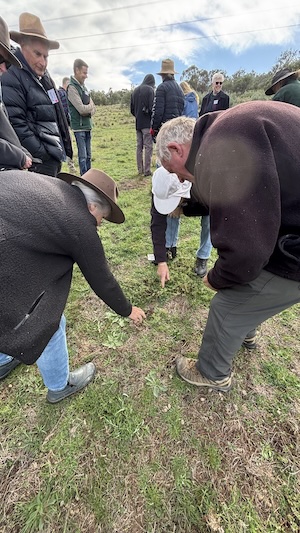
On 25 November, community members came together at Sutton Village Reserve for a practical and informative weed and native plant identification walk.


The walk was led by Bella Hart and Alicia Kaylock from Southeast Local Land Services, with valuable support from Brett Lees, Biosecurity Officer at Yass Valley Council. Weed control activities at the site are being co-funded by Crown Lands, highlighting the importance of partnership in managing public land.


SuttonWeedWalk Group


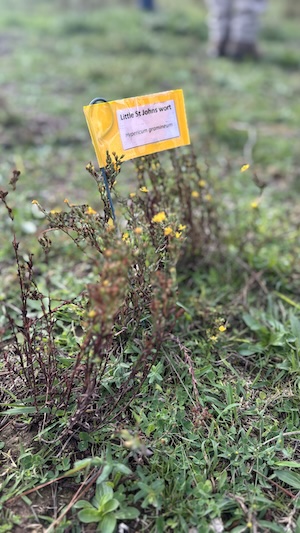
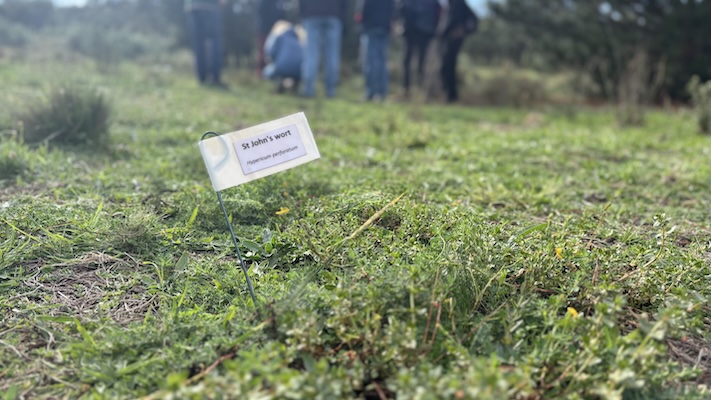
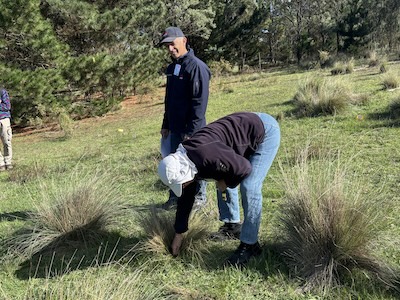
Participants focused on some of the major weeds impacting our region, including African Lovegrass, St John’s Wort, Serrated Tussock and blackberries. A key theme of the walk was learning how to confidently identify these species, particularly as some have native “look-alikes”. Developing this more detailed knowledge helps landholders and volunteers distinguish the good from the bad and make informed management decisions.


SuttonWeedWalk Weeds


The group also discussed tools that can assist with weed identification, including the NSW WeedWise app, available on both Apple and Android devices. These resources are proving invaluable for ongoing learning in the field.


Looking ahead, Sutton Landcare is actively considering suitable native species to replace weeds once control works are undertaken. Avoiding bare soil is essential to prevent reinfestation and support healthy regeneration.


Thank you to everyone who participated, and especially to Alicia, Bella and Brett for generously sharing their expertise.


Written by Arnold Dekker, Sutton Landcare

Below Your Knees: Exploring Our Native Grasslands

A day of learning, connection, and inspiration at Scholfield’s TSR


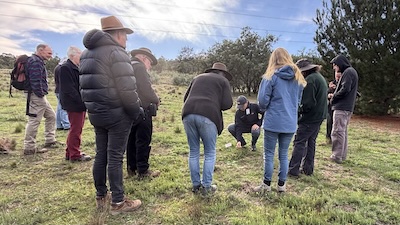
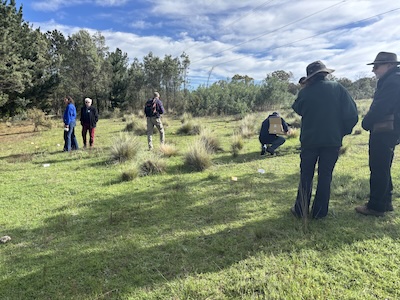
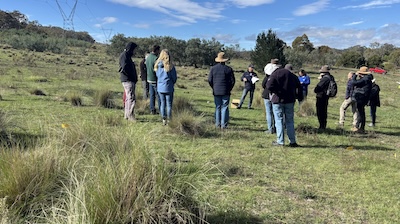
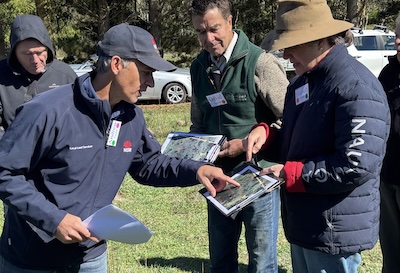
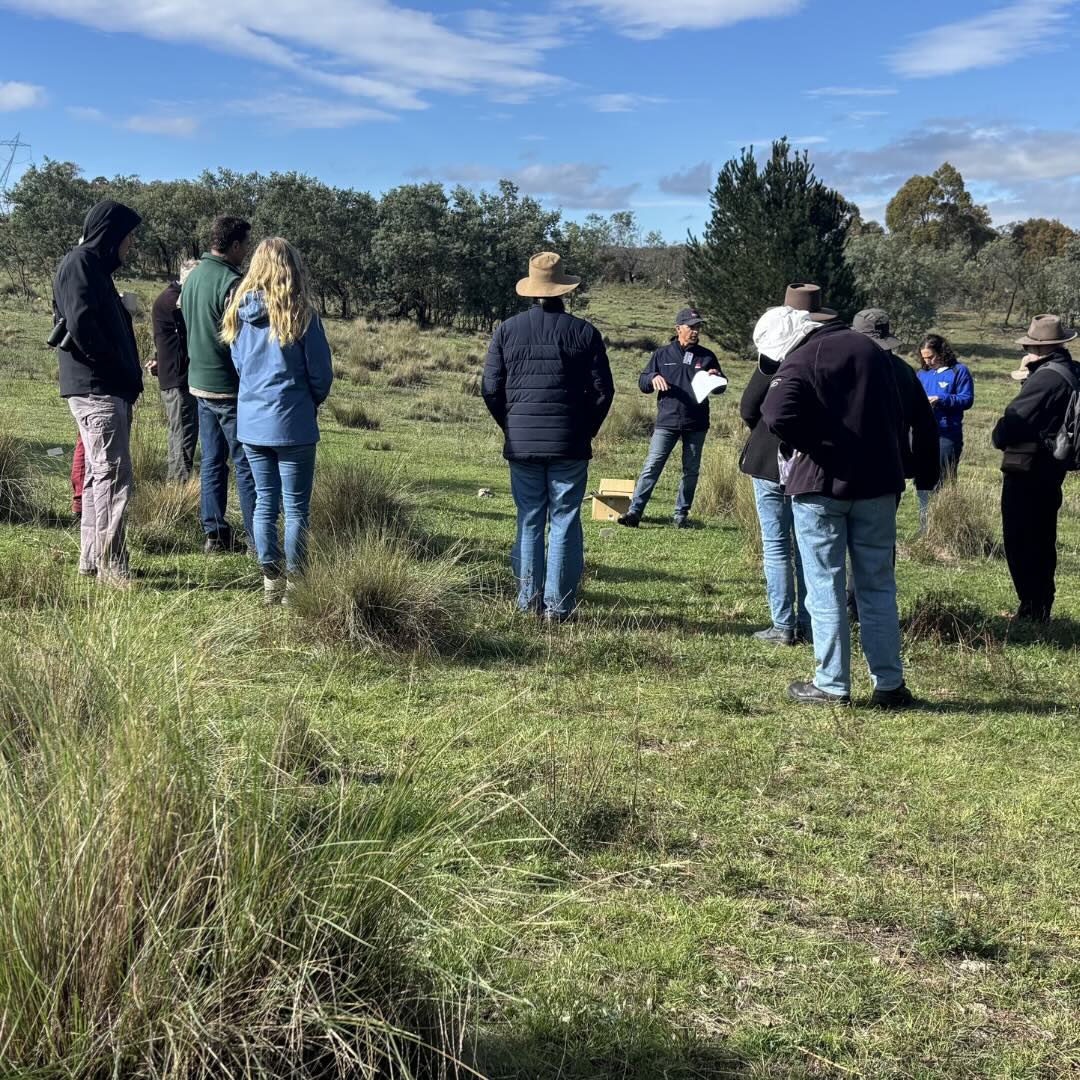
Many Landcarers and community members turned out for the popular Below Our Knees: Exploring Our Native Grasslands workshop, held at Scholfield’s Travelling Stock Reserve (TSR) near Bywong. Jointly hosted by the Yass Area Network of Landcare Groups (YAN) and the Upper Shoalhaven Landcare Council, the workshop brought together experts, local Landcarers, and curious community members to learn more about managing and restoring our native grasslands.


251117 BelowOurKnees NativeGrassland 4247 2    251117 BelowOurKnees NativeGrassland 4246


Understanding the value of native grasslands


The day began with Friends of Grasslands (FOG) ecologist Sue McIntyre, who introduced the group to the ecology, value, and management needs of native grasslands. Sue emphasised one crucial rule: don’t fertilise. Native grasslands thrive in low-nutrient environments, and where past fertiliser use or pasture improvement has occurred, it can take decades for nutrient levels to drop enough for native species to return.

But the long wait is worth it—many native grassland plants are hardy perennials that offer year-round groundcover, productive grazing, rich biodiversity, and habitat for insects, birds, and a wider ecosystem, all while requiring very little intervention.


251117 BelowOurKnees NativeGrassland 4249   251117 BelowOurKnees NativeGrassland 4251   251117 BelowOurKnees NativeGrassland 4243


Sue also explained how weeds often invade grasslands via runoff lines, where both nutrients and seeds accumulate. While small-scale erosion can create opportunities for native species to establish, more severe erosion tends to favour exotic annual weeds. Maintaining groundcover and slowing water movement, using logs or other small interventions can make a significant difference.


Restoring native grasslands, Sue reminded everyone, is a long game requiring patience, consistency, and strategic weed management. Allowing native species to spread naturally, or assisting them through targeted planting, can slowly shift degraded areas back toward ecological resilience.


251117 BelowOurKnees NativeGrassland 4256   251117 BelowOurKnees NativeGrassland 4258


Exploring the reserve


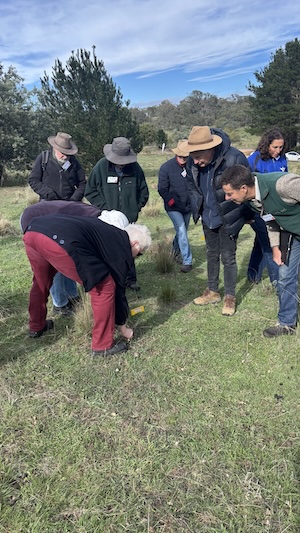
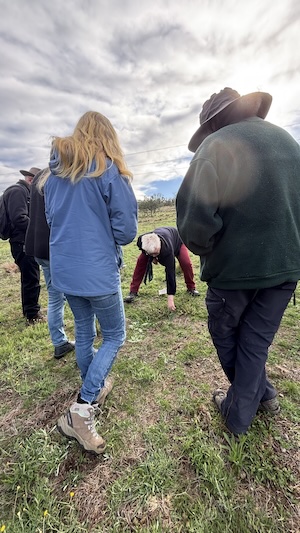
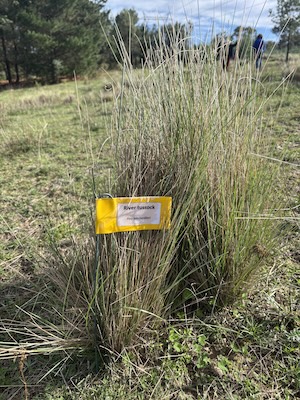
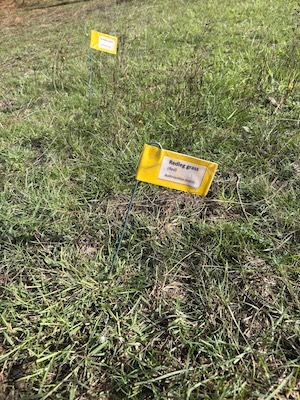
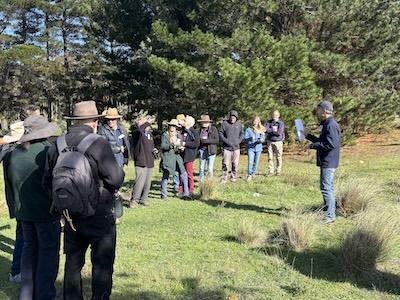
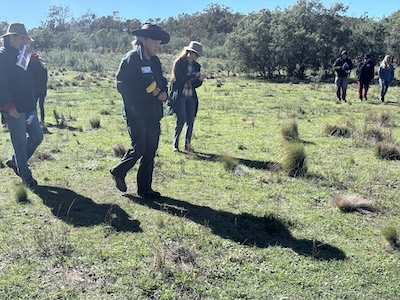
The group then toured the reserve with FOG members Margaret Ning, David Johnson, and Sue, who pointed out species of interest and shared insights into native–exotic look-alikes (including plantain). Participants enjoyed hands-on plant identification and lively discussion among the grasses.


251117 BelowOurKnees NativeGrassland 4270   251117 BelowOurKnees NativeGrassland 4275   251117 BelowOurKnees NativeGrassland 4241


251117 BelowOurKnees NativeGrassland 4264   251117 BelowOurKnees NativeGrassland 4272


Weed identification and management


Local Land Services officers Bella Hart and Alicia Kaylock then led a practical session on weed identification and control within grassland ecosystems. They covered key strategies for managing blackberry; choosing the right herbicide, timing treatments, and considering factors such as residual effects on nearby plants and what is practical to achieve with consistent effort.


251117 BelowOurKnees NativeGrassland 4286   251117 BelowOurKnees NativeGrassland 4287


Weed ID and control methods were also discussed for serrated tussock, African lovegrass, and St John’s wort. The message was clear: consistency is the key, and even simple tools can be powerful—nothing beats a good old-fashioned hoe.


Learning the history of the reserve


David McDonald from the local Geary’s Gap/Wamboin Landcare Group shared some of the history of the TSR, including the origins of the Scholfield name and how the reserve once formed part of a much larger protected area.


  251117 BelowOurKnees NativeGrassland 4283   251117 BelowOurKnees NativeGrassland 4277   


Collaboration and community: tackling weeds together


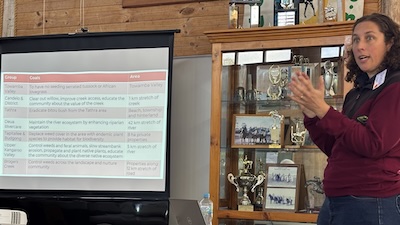
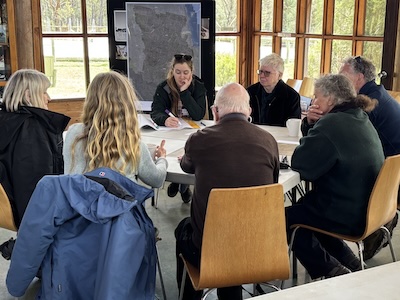
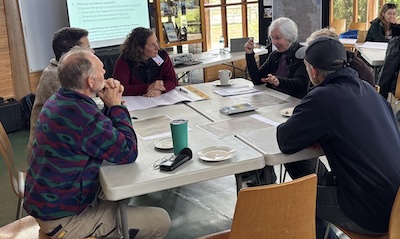
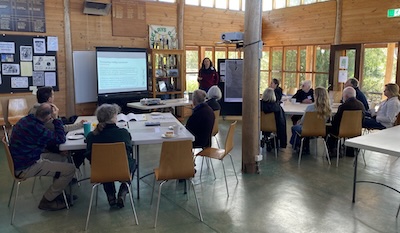
The group then moved to the Bywong Community Hall to hear from Dr Sonia Graham from the University of Wollongong. Sonia presented her research on how Landcare groups work together to tackle weed issues across landscapes.

She highlighted approaches that lead to success:

  • - Defining a clear geographic focus
  • - Setting achievable goals
  • - Assigning tasks based on people’s strengths
  • - Involving the whole community—from landholders to government agencies
  •  

Beyond the environmental outcomes, Sonia also spoke about the powerful social benefits: reducing isolation, building emotional support, and forging new friendships among neighbours.


251117 BelowOurKnees NativeGrassland 4294   251117 BelowOurKnees NativeGrassland 4296


Local connections and next steps


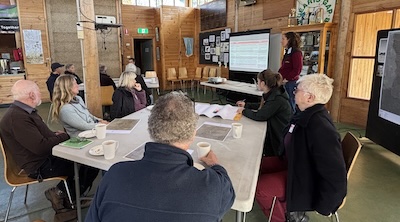
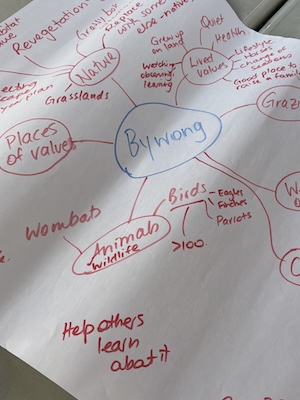
After Sonia’s presentation, participants broke into smaller, geographic-specific groups to introduce themselves, discuss issues important to their local area, and share ideas. Conversations continued over lunch, strengthening connections and sparking enthusiasm for future collaborations.

As a follow-on from the workshop, YAN and our partners hope to support interested groups to connect and work together on issues and activities they care about. If you’d like to get involved—or simply learn more—please reach out to your local Landcare group or coordinator.


251117 BelowOurKnees NativeGrassland 4305   251117 BelowOurKnees NativeGrassland 4304


251117 BelowOurKnees NativeGrassland 4303   251117 BelowOurKnees NativeGrassland 4246


Get in touch


Gearys Gap / Wamboin Landcare
ggw.landcare@gmail.com

Yass Area Network of Landcare Groups
coordinator@yan.org.au

Upper Shoalhaven Landcare Council
upper.shoalhaven@gmail.com


Written by Sarah McGrath, YAN Local Coordinator


Below Our Knees Native Grasslands Workshop Acknowledgement

Follow on Facebook