Blog

Water First: Exploring Landscape Rehydration at Bookham

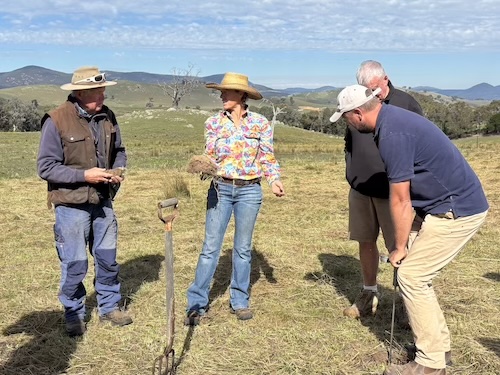
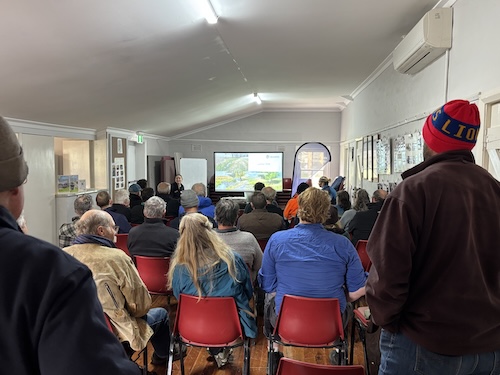
Around 30 local landholders gathered at Bookham recently for a Landscape Rehydration Field Day hosted by Bowning Bookham Landcare and presented by the Mulloon Institute.

The day offered a practical introduction to one of the most important resources on any farm – water. Participants explored why keeping water in the landscape benefits not only individual farming enterprises, but also the wider district and the environment as a whole.
 

Mulloon Bookham 20260604 7399   Mulloon Bookham 20260604 7415


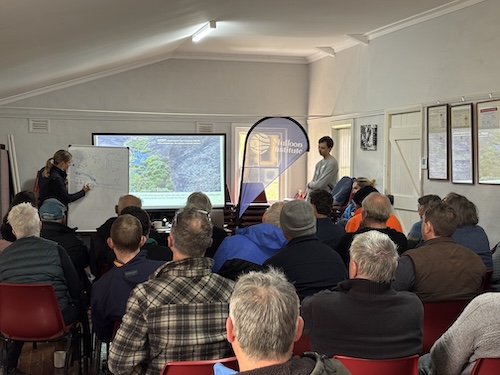
The morning began with Program Manager Erin Healy and Landscape Planner Annabel Manning unpacking some of the science behind landscape rehydration. From simplified thermodynamics to the water cycle, they explained how water moves through our landscapes and why healthy, well-vegetated systems are so important.


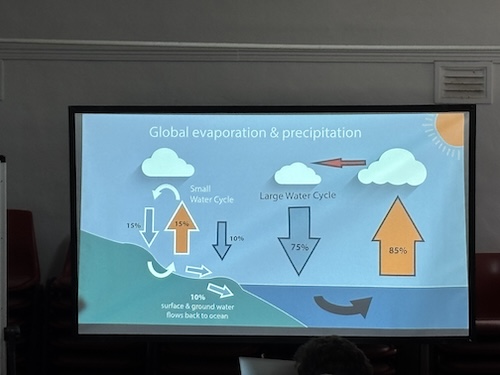
One of the key concepts discussed was the difference between the “big” water cycle and the “small” water cycle. While we often think of water evaporating from the oceans and returning as rain, the small water cycle involves plants returning moisture to the atmosphere through evapotranspiration and transpiration. Remarkably, all of the water in this smaller cycle falls back onto land as rain.
 

Mulloon Bookham 20260604 7420


Healthy landscapes with abundant vegetation can cycle water through this process many more times before it is lost to the oceans. More plants create more organic matter, organic matter holds more water, and more water supports more plant growth – a positive cycle that benefits both productivity and resilience.


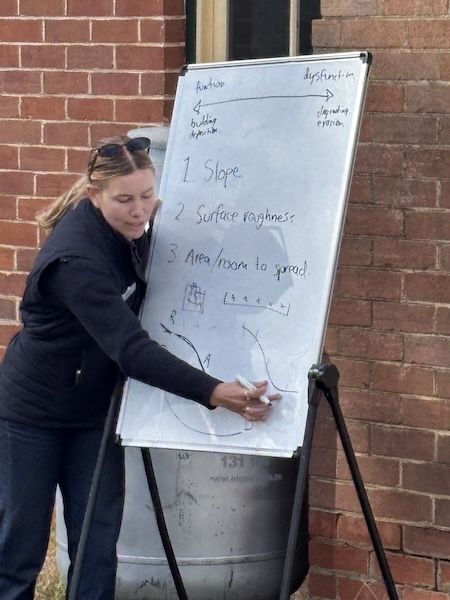
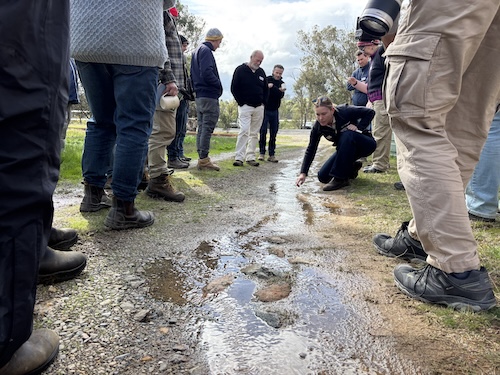
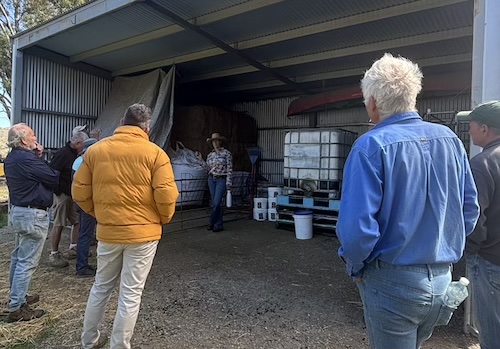
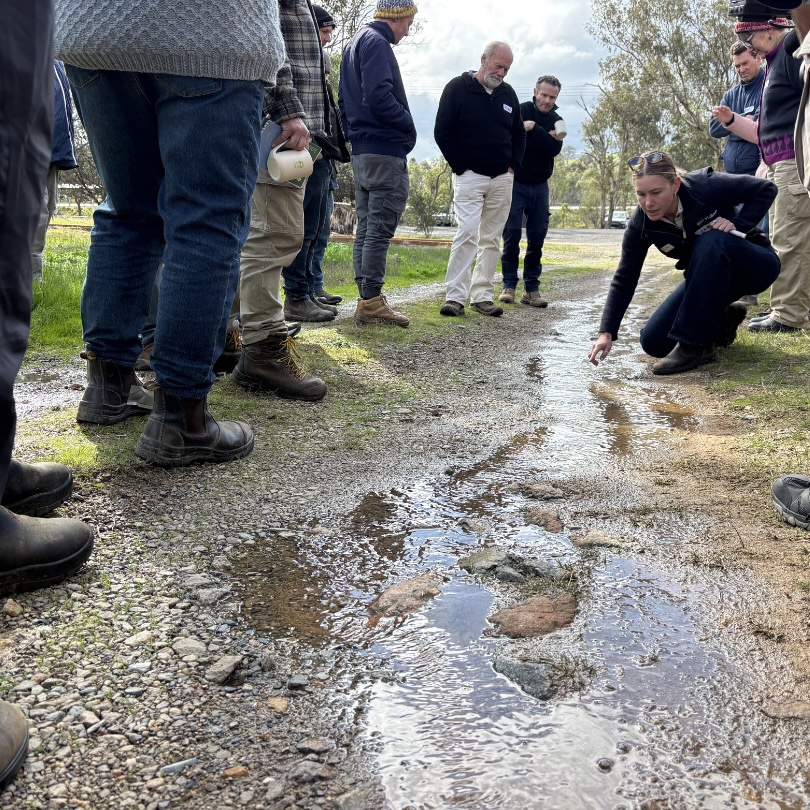
Following morning tea, the theory came to life with a miniature landscape demonstration. Using a hose flowing down a driveway, participants watched how water moves across different surfaces and slopes. The exercise highlighted how factors such as surface roughness, slope and opportunities for water to spread can influence erosion, deposition and water movement.
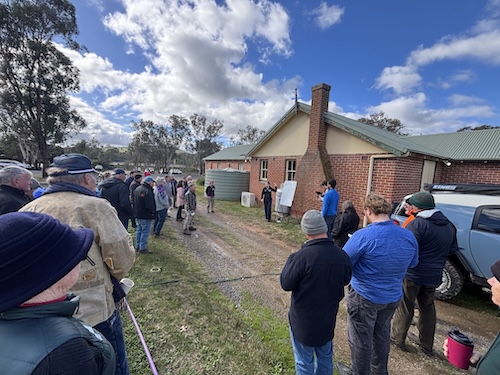
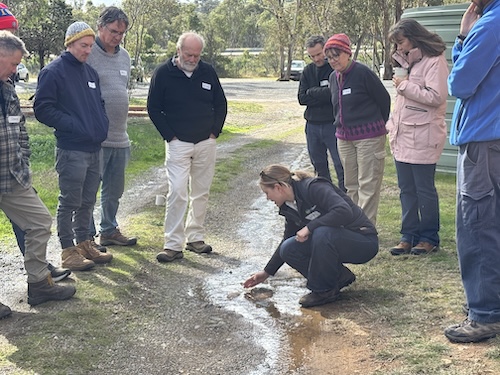
 

Mulloon Bookham 20260604 7426   Mulloon Bookham 20260604 7438   


Mulloon Bookham 20260604 7428   Mulloon Bookham 20260604 7440


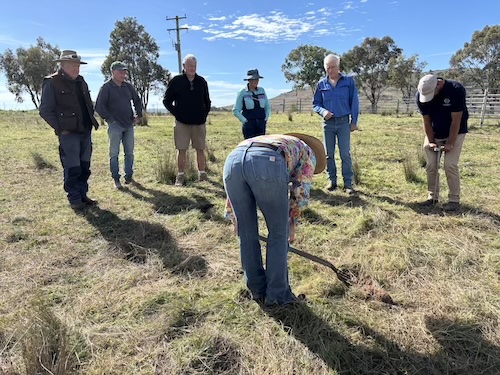
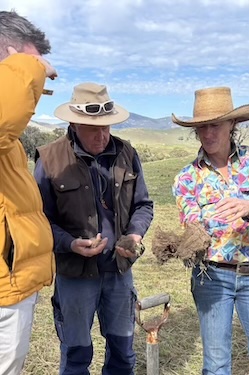
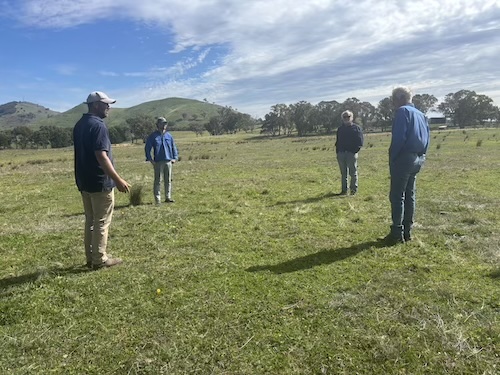
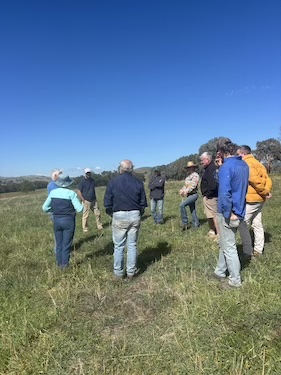
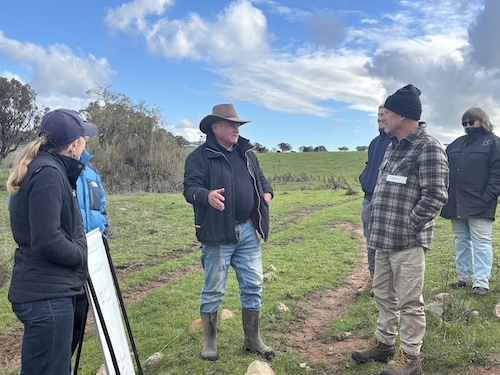
After lunch, the group headed to a nearby property to see these principles in action. Participants inspected areas where water flow condensed and spread, observed head cuts and erosion features, and discussed how different interventions can help slow water, reduce erosion and improve landscape function.
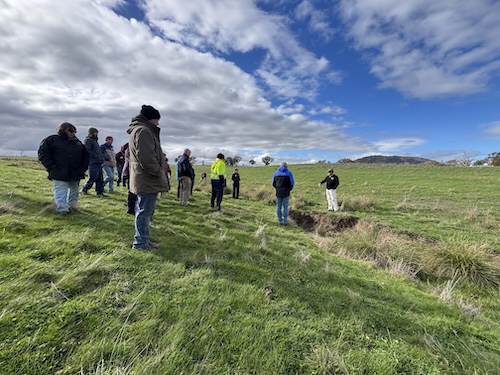
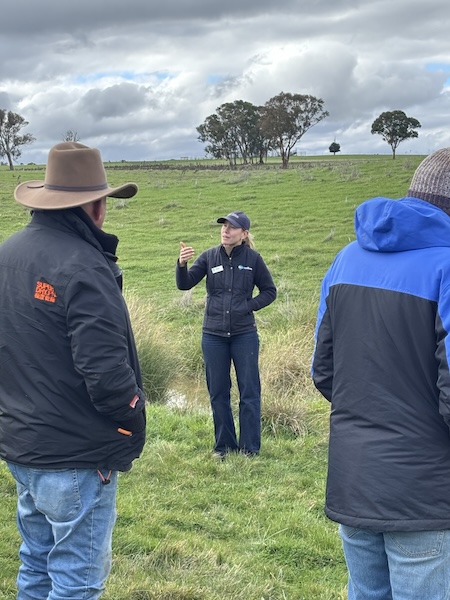
 

Mulloon Bookham 20260604 7464   Mulloon Bookham 20260604 7470   


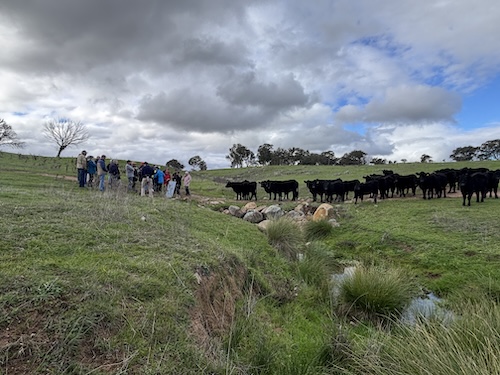
A memorable analogy from the day compared a metre-deep flow of water moving down a creek to the force of an Angus bull. By pure coincidence, a nearby mob of Angus heifers appeared at just the right moment, providing a perfect visual demonstration and a few laughs among the group.
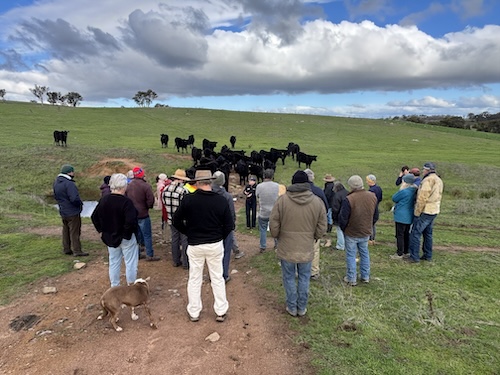
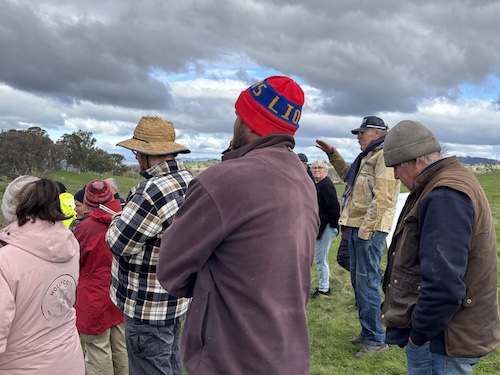
 

Mulloon Bookham 20260604 7501   Mulloon Bookham 20260604 7476


Throughout the day, discussion focused on practical steps landholders can take to improve water retention and landscape health. Key priorities included:

  • - Planting more vegetation
  • - Protecting and expanding intact landscape features
  • - Slowing actively eroding areas
  • - Repairing or rebuilding degraded waterways
  •  

Participants also learned about different stages of intervention, including encouraging water to flow through, over and around structures in ways that support landscape function.
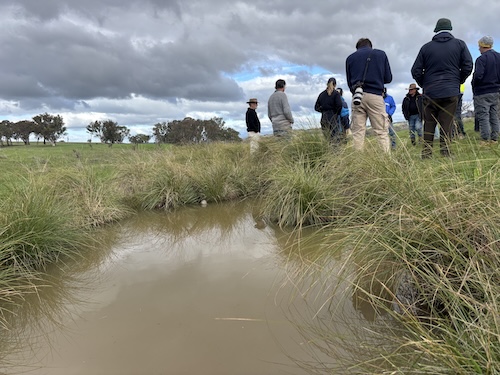
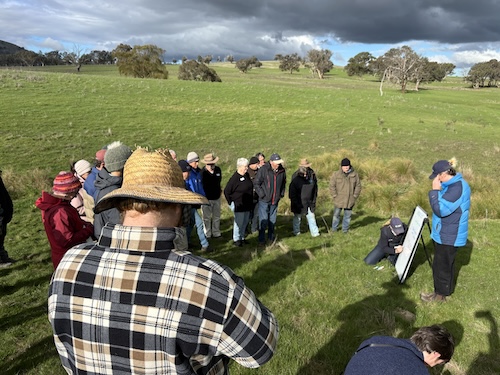
 

Mulloon Bookham 20260604 7479   Mulloon Bookham 20260604 7486


The field day covered a remarkable amount of useful and practical information, providing plenty of ideas for landholders interested in building more resilient and productive landscapes.

For those keen to learn more, the Mulloon Institute will return to the district in August to deliver a two-day Landscape Rehydration Bootcamp. The bootcamp will build on these concepts, helping landholders develop practical plans tailored to their own properties.
 

Mulloon Bookham 20260604 7497   Mulloon Bookham 20260604 7508


If you are interested in attending, keep in touch with Bowning Bookham Landcare for upcoming details.


________________________

This Community of Practice (CoP) project is funded through HumeLink’s Community Investment and Benefits Program. The project is designed to ensure local communities share in the positive outcomes of the project through targeted funding and support. 

 

Transgrid Mulloon Logo


Bugs and Brews: Exploring Biofertilisers and Inoculants on Farm

As pressures on agricultural systems continue to grow, many farmers are looking beyond synthetic fertilisers and inputs towards biological systems which work with natural processes to improve soil health, plant growth and resilience. Biofertilisers, inoculants and biological cultures are increasingly being explored as tools to stimulate plant growth, unlock nutrients in plant-available forms and build the biological complexity that supports healthy soils and productive landscapes.


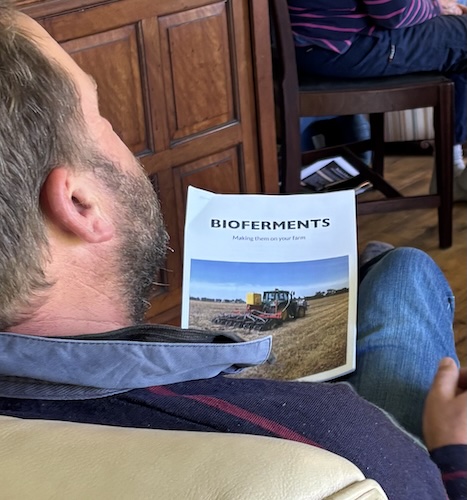
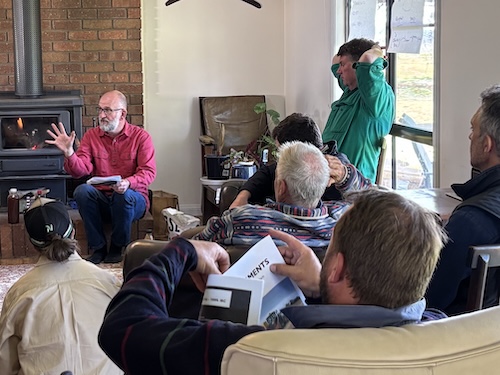
Recently, members of the Bowning Bookham Landcare group gathered for a hands-on “Bugs and Brews” workshop with David Hardwick, Soil Land Food, who brought a wealth of knowledge and practical experience to the day. The workshop gave participants the opportunity to take a deeper dive into the world of biofertilisers, inoculants and biological brewing systems for agriculture.


BugsBrews SMcGrath 7181 2  BugsBrews SMcGrath 7191 2


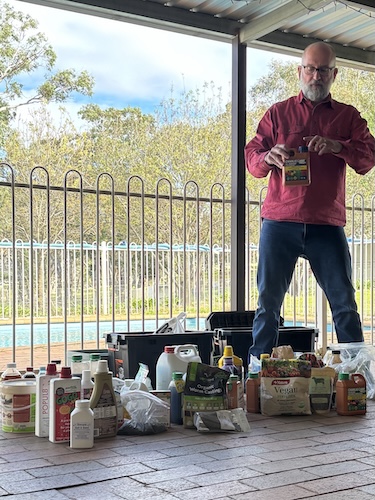
The workshop explored the main types of biological products commonly added to soils, including:

  • Biostimulants – compounds which stimulate plant growth and biological activity
  • Fertilisers – products which provide additional nutrients
  • Soil amendments – conditioners which alter soil chemistry or structure
  • Inoculants – living organisms which provide beneficial services within the soil and plant system.


BugsBrews SMcGrath 7184 2   BugsBrews SMcGrath 7190 2

  •  

Participants discussed these differnt products and the many forms which are currently avaiable on the market and the important question of what actually makes nutrients available to plants, before turning their attention to the practical side of building biological cultures.


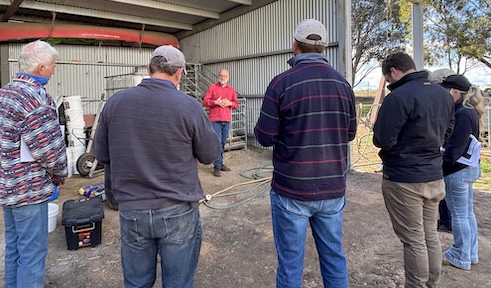
David guided the group through the key ingredients needed to create successful cultures: energy, nutrients, air, water, temperature and a starter culture. Discussion then moved into how a base culture can be expanded and adapted for use in producing a range of other biological products, including biofertilisers, compost stimulants and inoculants.


BugsBrews SMcGrath 7216 2     BugsBrews SMcGrath 7233 2


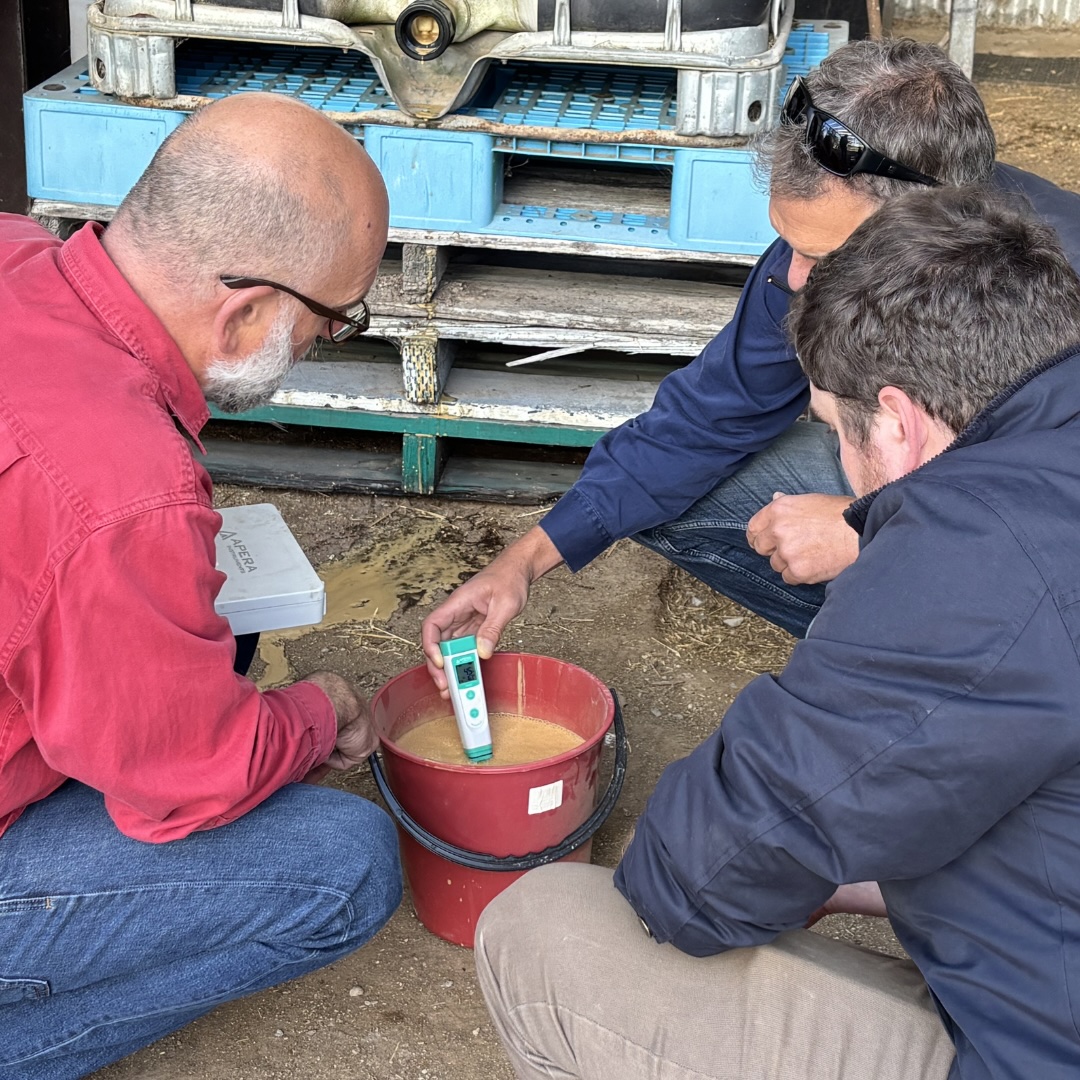
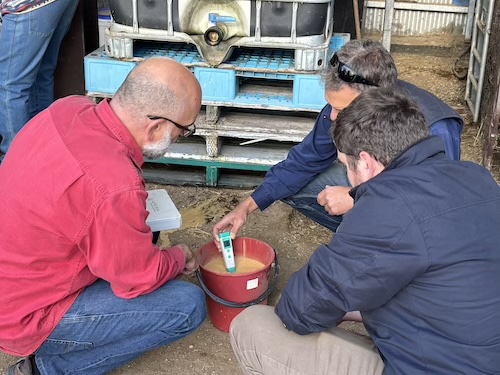
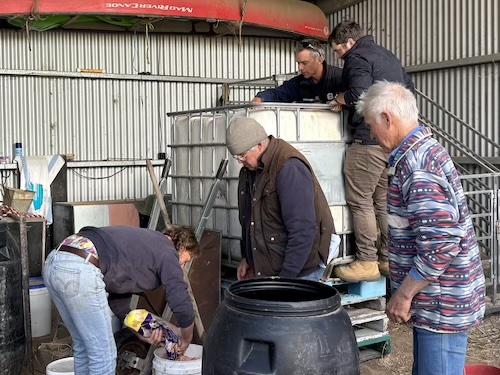
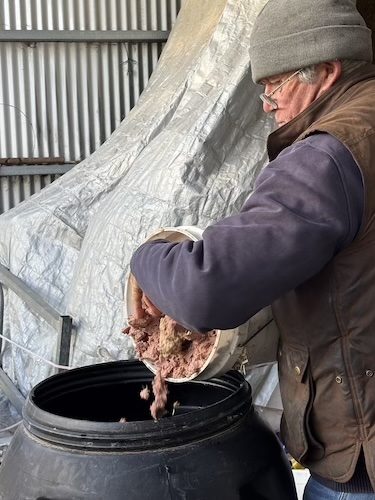
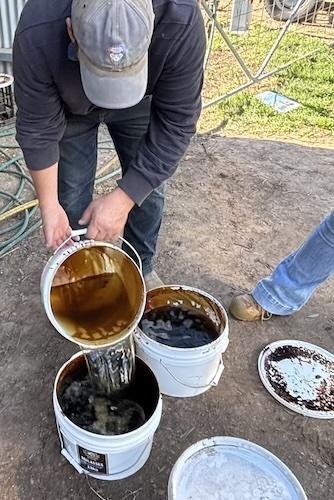
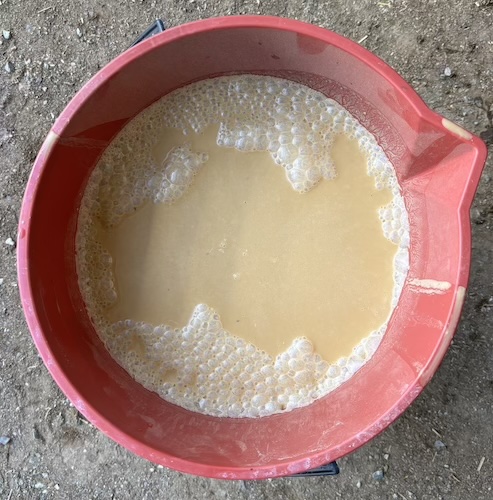
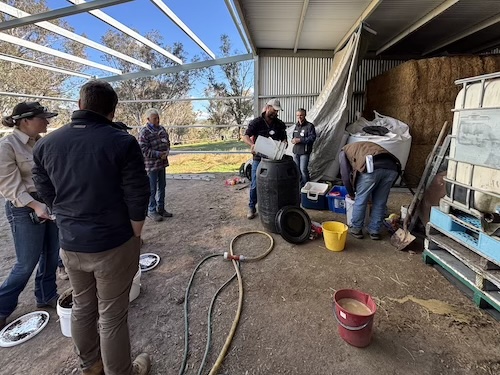
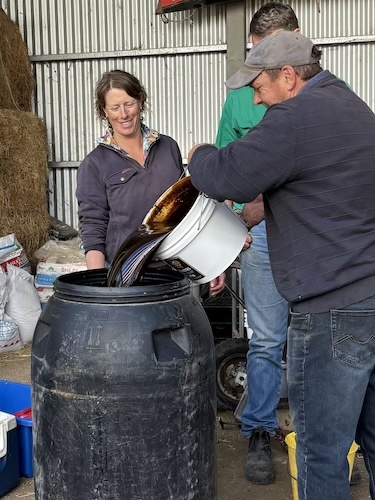
Building on work started at the previous Landcare on Farms event, the group headed back outside to continue developing a Kefir-based culture into a hydrolysate bio-compound. The process centres around the anaerobic fermentation of a protein source to create a product with both biofertiliser and biostimulant properties.


This batch will ferment slowly over winter before being ready for use on pasture, fodder crops and other agricultural applications in spring.


For this particular brew, pet food was used as the protein source, although meat, fish, eggs or other protein-rich materials can also be used. Molasses provided energy for the fermentation process, while the starter culture came from the Kefir-based brew developed at the previous workshop.


BugsBrews SMcGrath 7244 2   BugsBrews SMcGrath 7229 2   BugsBrews SMcGrath 7239 3


A big thank you goes to Kylie and Oliver Kimpton for hosting the workshop and helping get the culture underway. The group looks forward to future visits and discussions around how the biofertiliser develops over winter and the impacts once it is applied in the paddock.


BugsBrews SMcGrath 7241 2   BugsBrews SMcGrath 7254 2


The Landcare on Farms program continues to provide opportunities for farmers and graziers across the district to learn together, share ideas and explore practical approaches to building resilient farming systems. Anyone interested in getting involved is encouraged to get in touch with the the Bowning Bookham Landcare group bblandcare@yan.org.au


BugsBrews SMcGrath 7200 3


Written by Sarah McGrath, Landcare Coordinator, Bowning Bookham Landcare Group


BugBrews Acknowedgement InLine

Landcare on Farms: Winter Preparation, Shared Knowledge and Stronger Connections

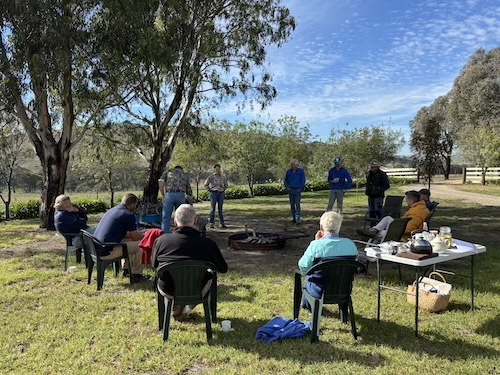
Bowning Bookham Landcare’s Landcare on Farms group came together on a perfect autumn morning, with a clear focus: preparing for winter, sharing what’s working on-farm, and getting a head start on a biofertiliser culture for the upcoming Bugs & Brews Workshop.


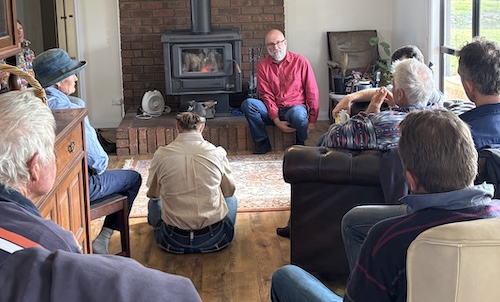
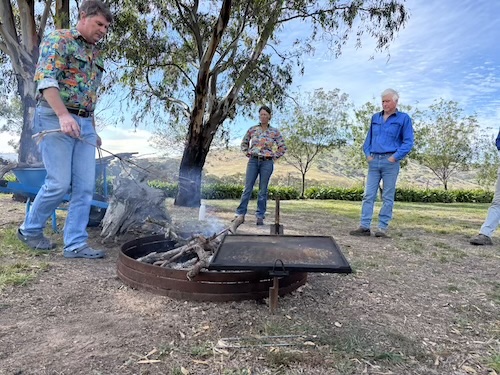
Gathered around a warm fire, local landholders reconnected with familiar faces and welcomed new members into the fold. It quickly became clear that regardless of property size and individual operations, there are strong commonalities across the group, particularly in management goals, challenges, and a shared commitment to improving land health.


LandcareOnFarms 260417 6654   LandcareOnFarms 260417 6655


Conversations flowed easily, covering a wide range of seasonal observations and practical approaches. Landholders discussed livestock grazing patterns, noting shifts in what stock have been selectively grazing this year, particularly increased interest in species like dandelion. Dung beetle activity, pasture composition (including the dominance of phalaris), and the ongoing push to increase biodiversity were all key topics.


   LandcareOnFarms 260417 6661   LandcareOnFarms 260417 6670


As always, winter planning was front of mind. Discussions around feed budgeting highlighted the different approaches being taken; what’s working, what’s being trialled, and what’s being reconsidered. Winter fodder crops were also part of the mix, alongside the inevitable but important conversations around markets, commodity prices and rainfall. Encouragingly, the outlook for grazing conditions was largely positive.


LandcareOnFarms 260417 6665   LandcareOnFarms 260417 6660


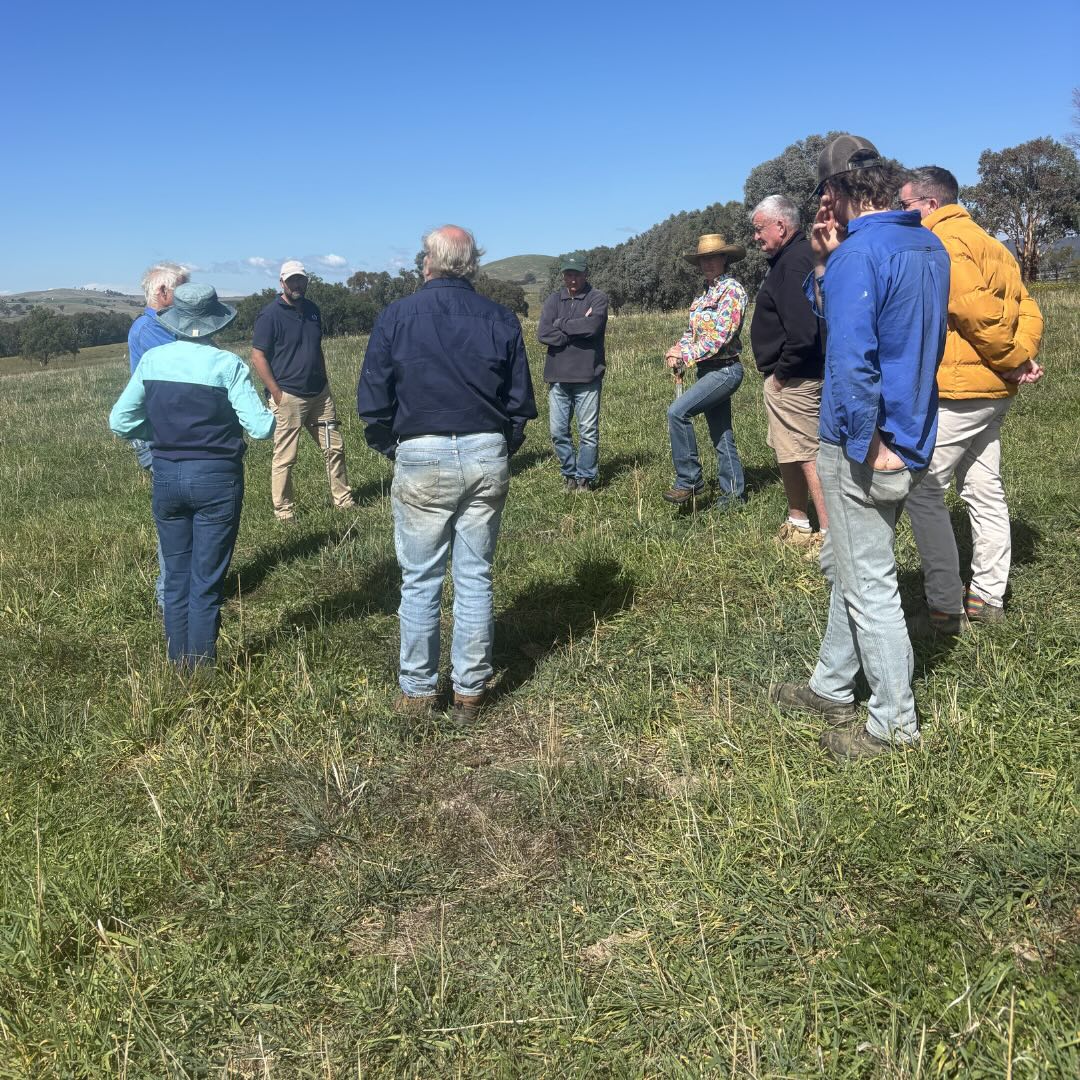
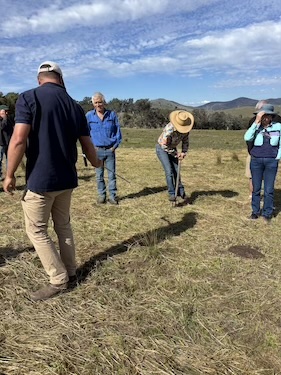
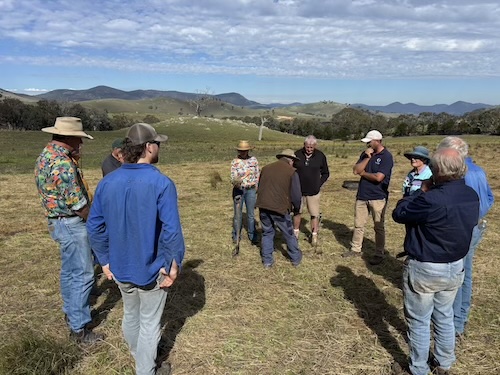
The group then headed out into the paddock to see firsthand what hosts Kylie and Oliver Kimpton have been implementing on their property. It was a valuable opportunity to observe groundcover levels and soil health at this critical time of year. Together, the group worked through simple methods to assess grazing days ahead and explored practical tools for better pasture management.
 

LandcareOnFarms 260417 6668   LandcareOnFarms 260417 6682   LandcareOnFarms 260417 6687


A quick demonstration of the Kiwi Tech electric fencing system was well received, showing how relatively simple, cost-effective solutions can be used to subdivide paddocks and improve grazing control.

 

The conversation then turned to biofertilisers and soil stimulants, with a focus on building a kefir-based culture in preparation for the upcoming workshop. Landholders shared their experiences and insights, reinforcing why these approaches are gaining traction, particularly in a time of rising input costs and a growing desire to work with natural systems to maximise productivity.


LandcareOnFarms 260417 6690   


A strong theme throughout the day was that many on-farm challenges can be addressed through thoughtful grazing and soil health management. With the right approach, it’s possible to run highly productive and efficient systems that remain resilient across seasonal variability.


Beyond the technical knowledge, the day reinforced something just as important: the strength of community. Neighbours and fellow group members are a valuable source of knowledge, support and inspiration. Many left the day feeling re-energised and motivated by the shared experience.


The social side was not forgotten, with everyone enjoying a relaxed lunch catered by the local Barneys Café rounding out a day that was as much about connection as it was about learning.


The group is now looking ahead to the Bugs & Brews Workshop on the 15 May 2026, as well as the next Landcare on Farms meet-up on Friday 3 July in Bookham.


For more information or to get involved, contact Sarah, bblandcare@yan.org.au.


Written by Sarah McGrath, Bowning Bookham Lnadcare Coordinator


BugBrews Acknowedgement InLine

Rain, seedlings and muddy hands at Bowning Bookham Landcare Nursery

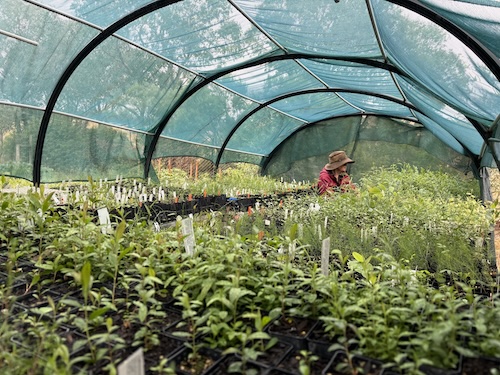
It was another misty, rainy morning when members of the Bowning Bookham Landcare Group gathered for a nursery morning tea, the kind of soft, steady rain that reminds us why we do what we do.


BBLG Nursery Morning Tea 260222 5670   BBLG Nursery Morning Tea 260222 5652


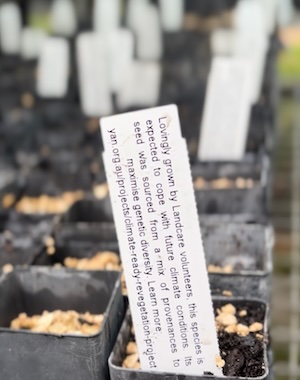
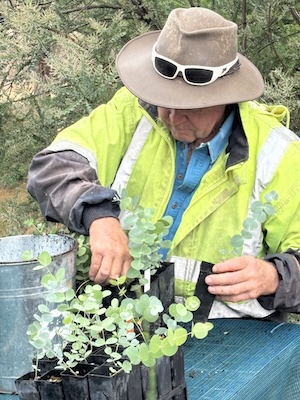
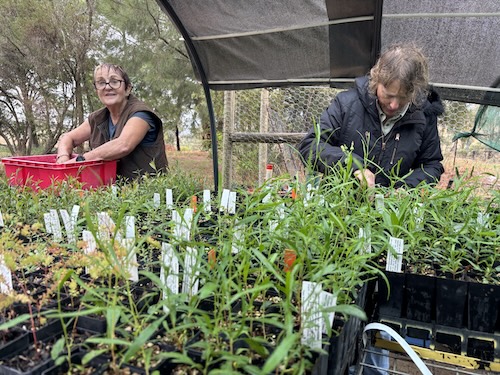
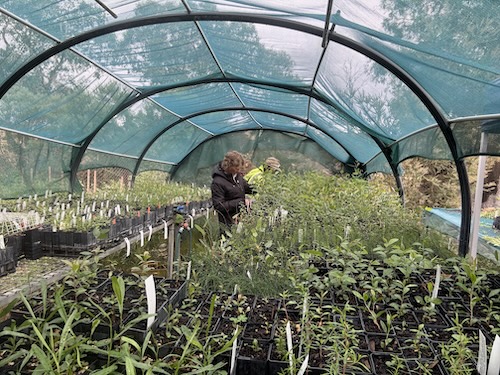
The seeds sown back in October (also in the rain!) are now up and thriving. Through summer’s heatwave conditions, our dedicated nursery manager Linda Thane kept them alive and flourishing. Thank you, Linda, we are so grateful for your care and commitment.


BBLG Nursery Morning Tea 260222 5641    BBLG Nursery Morniing tea 260222 4091 2


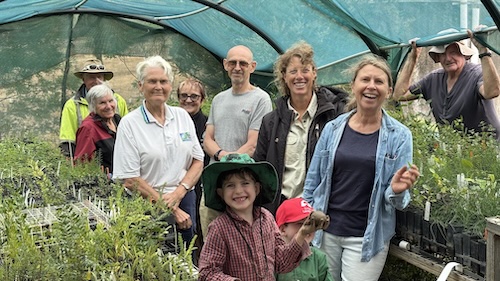
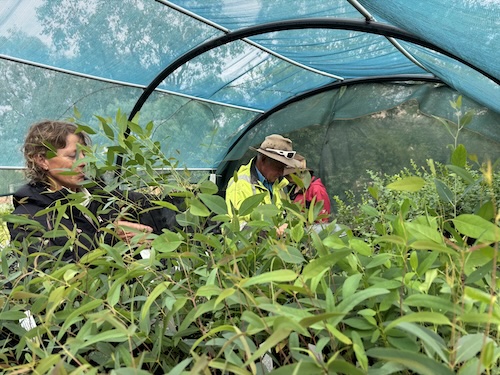
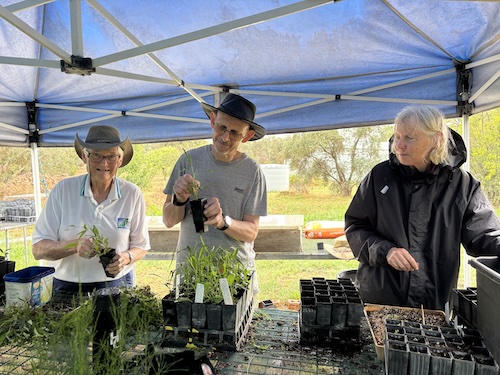
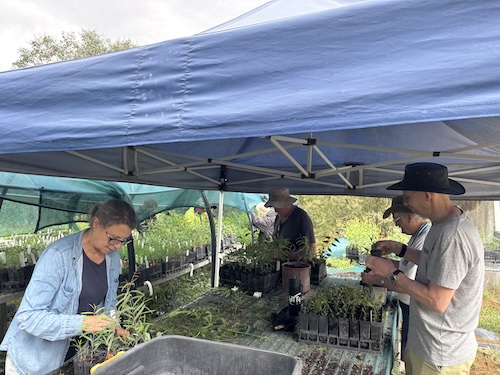
At this stage, the ‘climate-ready’ seedlings were carefully thinned to one strong plant per tube and thoroughly weeded. Volunteers made quick work of the task, chatting as they went and enjoying the simple satisfaction of working together.


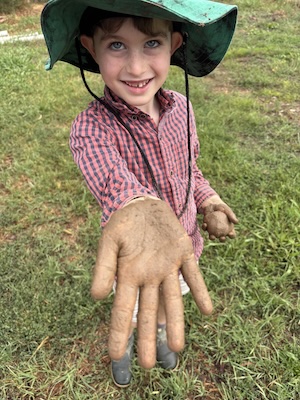
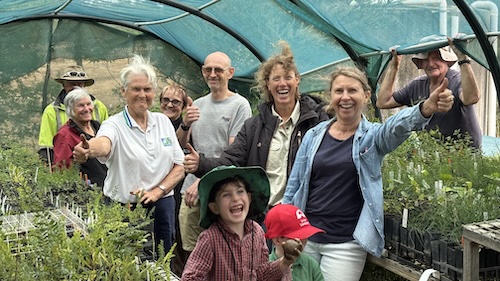
As one of our littlest Landcarers wisely said while filling tubes with potting mix, “The whole point of Landcare is to get your hands dirty.” And that’s exactly what everyone did; muddy hands, big smiles, and a shared sense of purpose. Thank you to all our volunteers for helping grow these plants for the betterment of our district.


BBLG Nursery Morning Tea 260222 5660   BBLG Nursery Morning Tea 260222 5643   BBLG Nursery Morning Tea 260222 5636


We’ve also sown a selection of autumn flowers and plants, which should be ready for distribution in the next couple of months.


   BBLG Nursery Morning Tea 260222 5639   BBLG Nursery Morning Tea 260222 5656


Planning your autumn or winter planting?

We’ll soon be open for plant requests to help fill your revegetation needs — big or small. You can view the list of species available on the YAN Nurseries webpage and start planning your project now.


If you’re considering a larger project this year or next, Bowning Bookham Landcare is also supporting landholders with the cost of establishing revegetation areas, including free tubestock and assistance with fencing through our Habitat Hops project.


To find out more, visit the Habitat Hops page or get in touch with us at bblandcaregroup@yan.org.au — we’d love to help you bring your revegetation plans to life.


BBLG Nursery Morning Tea 260222 5674  BBLG Nursery Morning Tea 260222 5651 


Written by Sarah McGrath, YAN Coordinator


NSW Landccare LEP Funding Acknowledgement Inline

Follow on Facebook