Blog

Testing Our New Seed Collections

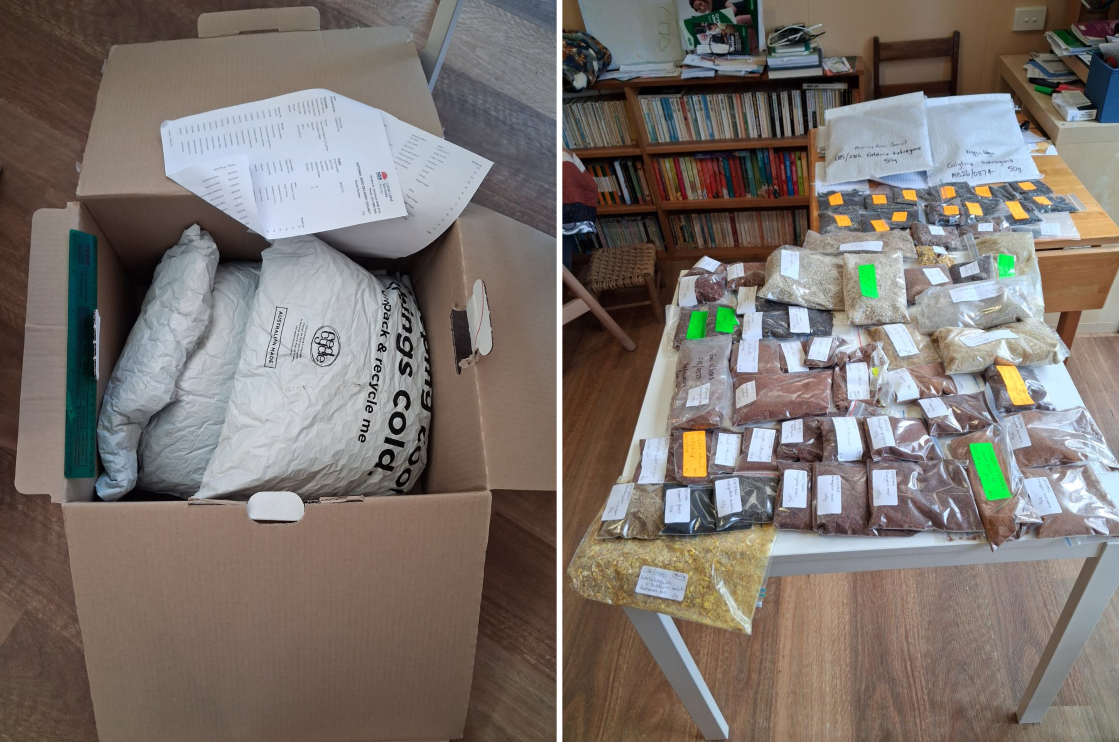
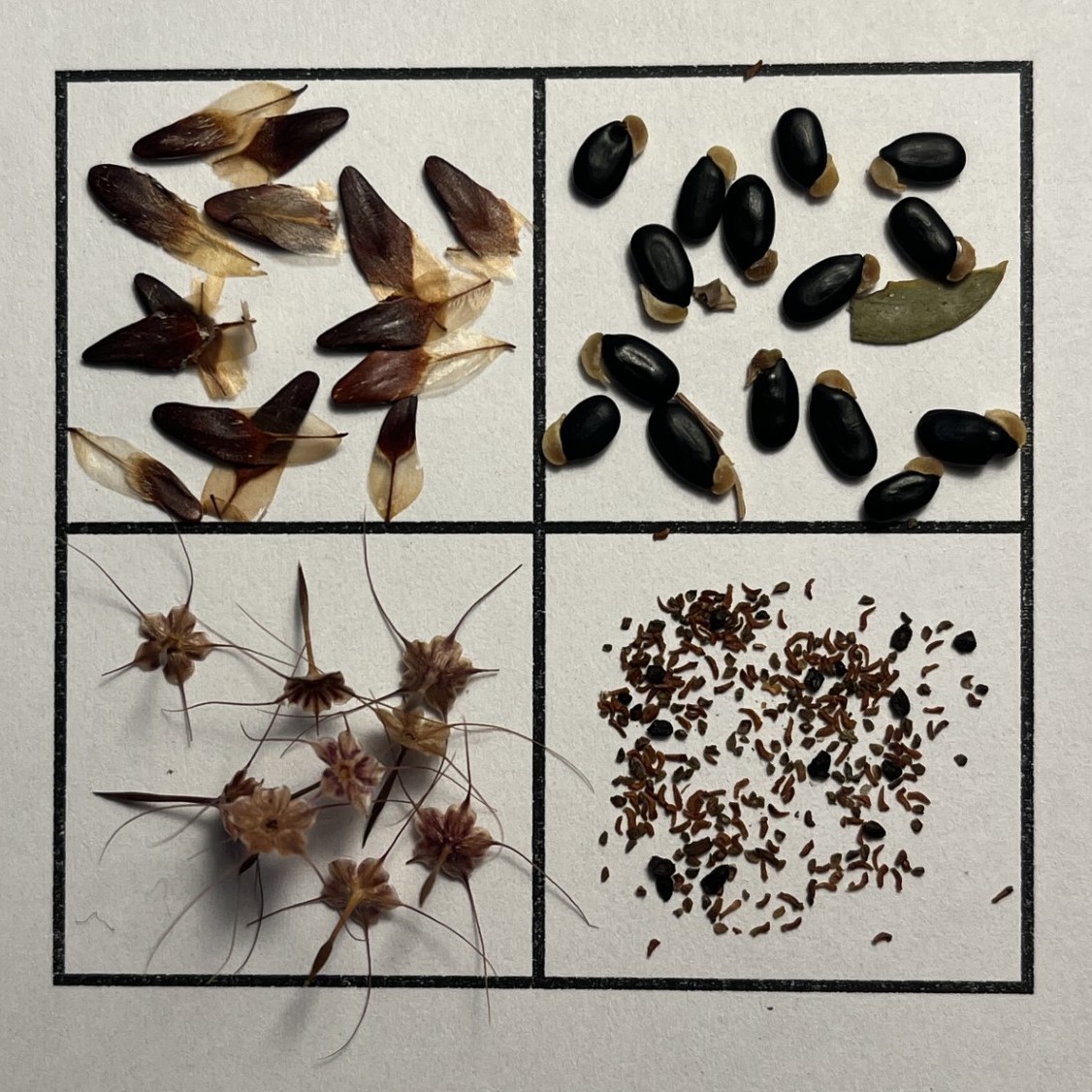
At the time of writing our last Climate Ready Revegetation blog, we were deep in the complex business of sourcing multi‑provenance seed for spring. Over the past month, the newly purchased collections from multiple suppliers have been arriving at the home of one of our wonderful volunteers, who carefully checks each delivery against the order — a quiet but essential step.


 Blog Germination seed


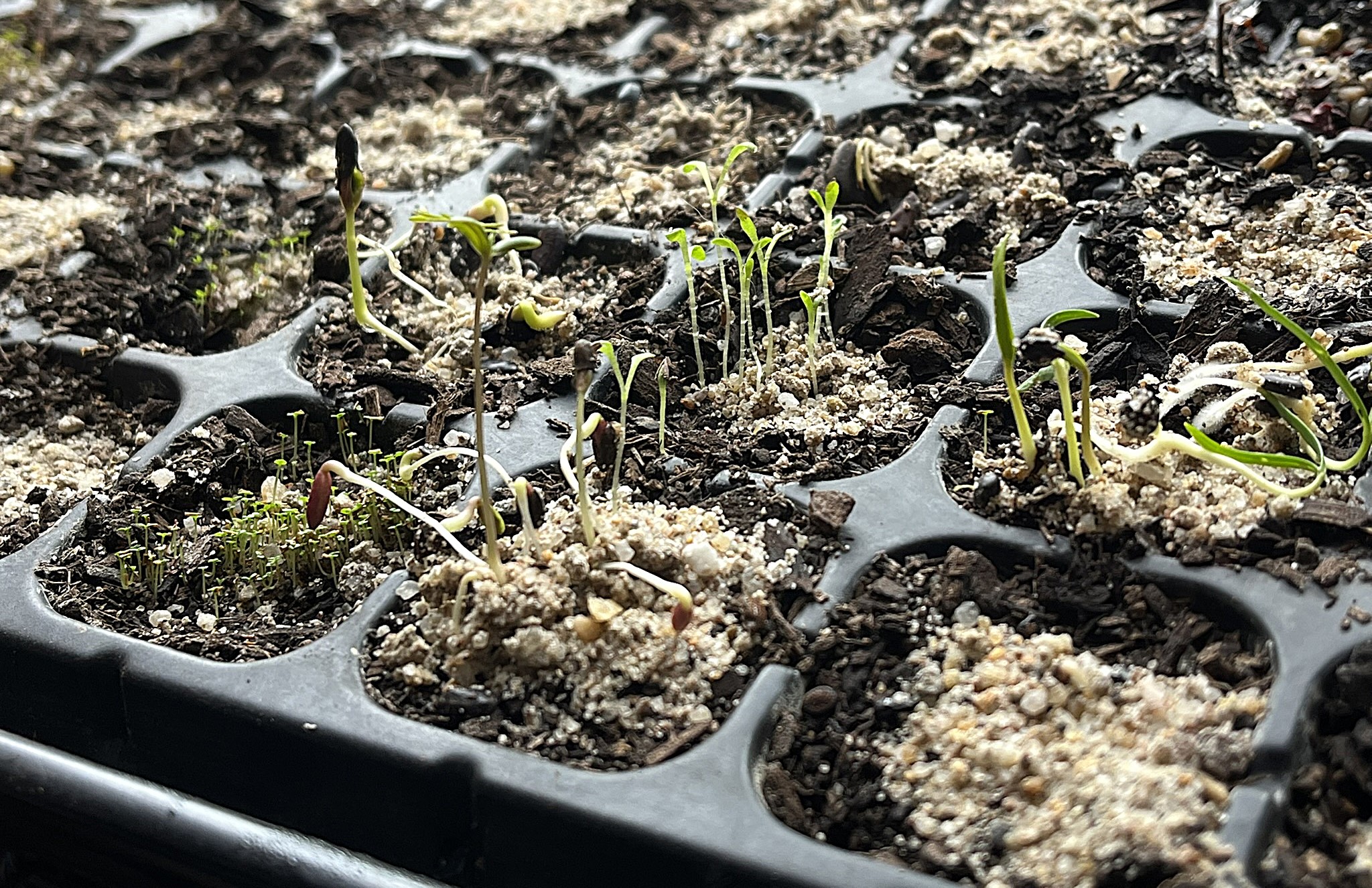
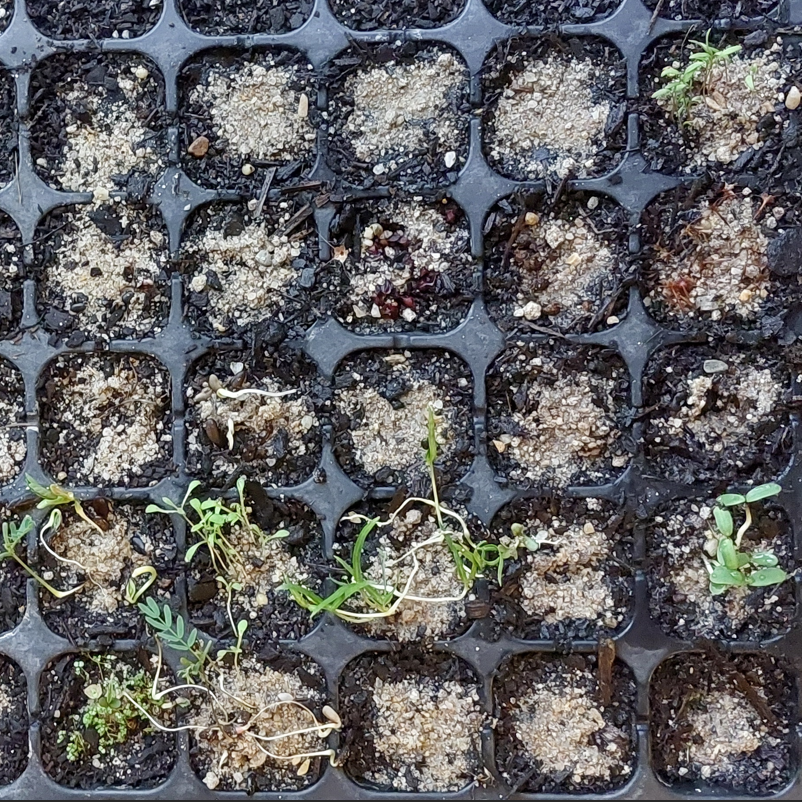
Now, with the seed safely in hand, we pick up the story at the next critical stage: germination testing. Volunteers are once again pivotal, checking whether each new seed collection germinates so that we can confidently distribute them to our nurseries and direct-seeding projects later in the year. This year we have around 150 new collections, so it is no mean task.


Blog Germination


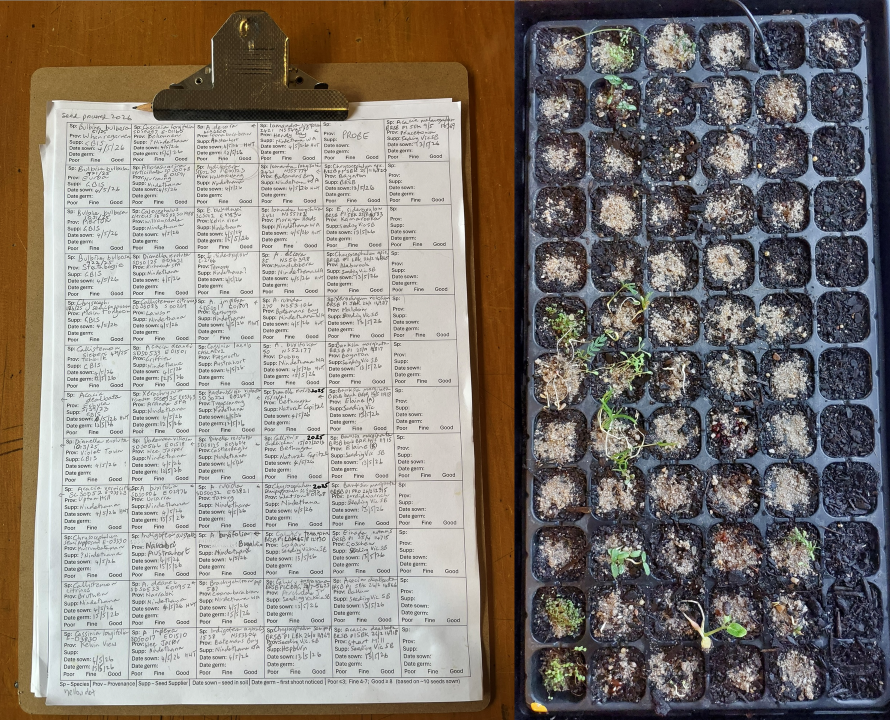
Seed from each new collection is placed in a soil-filled cell of a germination tray, kept indoors on a heat mat. Volunteers track each cell on a large reporting sheet that mirrors the layout of the tray, noting the species, supplier, provenance, date of sowing and date of germination. They also record whether germination is ‘poor’, ‘fine’ or ‘good’, helping us build a clearer picture of how different species and suppliers perform — and what our nurseries might expect.


Blog Germination tray and record sheet smaller2


We don’t give up easily. If seed from a new collection still doesn’t germinate after many weeks, it is over-sown to give it another chance, and will be tested again the following year if need be.


So far this year, our volunteers have reported that some collections have germinated very well. In the coming weeks, we will add the successful collections to our database and seed fridges, where it is kept for a few months before our big seed mixing day in early spring.


By Sonya Duus, Climate Ready Revegetation Project Officer


The Climate Ready Revegetation Project has been assisted by the NSW Government through its Environmental Trust. Landcare Australia Michael King grants enable us to purchase seed from diverse provenances.

Sourcing Seed for Spring

Have you ever wondered about the 'parents' of your Landcare nursery plants?


While many YAN Landcare members are placing their orders for autumn tubestock, we’re looking ahead to spring by sourcing the seed we need to produce next year’s genetically diverse climate-ready plants.


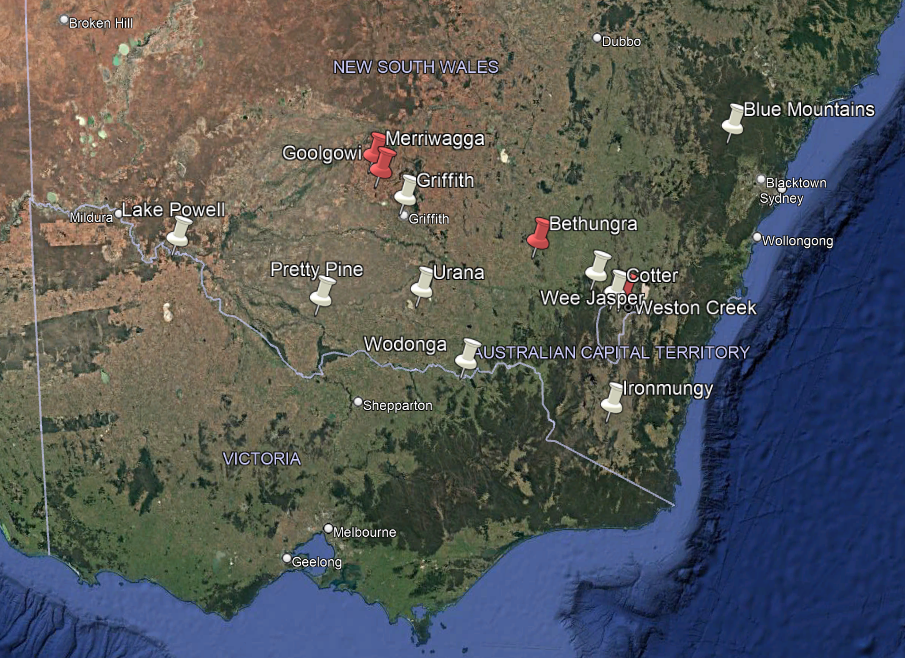
Careful seed sourcing is a core component of YAN’s Climate Ready Revegetation Program. To maximise genetic diversity, we purposely source seed from across a species’ natural distribution, informed by genetic mapping where it is available (keep reading for more on that).


CRR seed sourcing 26 GoogleEarth

We use Google Earth as a decision-making tool in the process of seed sourcing


This approach helps to mimic the natural gene flow that existed before widespread habitat fragmentation. Genetic diversity translates into a variation of plant traits, some of which will be better suited to surviving our changing climate and other environmental pressures. Those that are advantageous will survive and be passed on to the next generation. This is the essence of ‘adaptive capacity’. It means that a plant population can be self-sustaining over the long term.


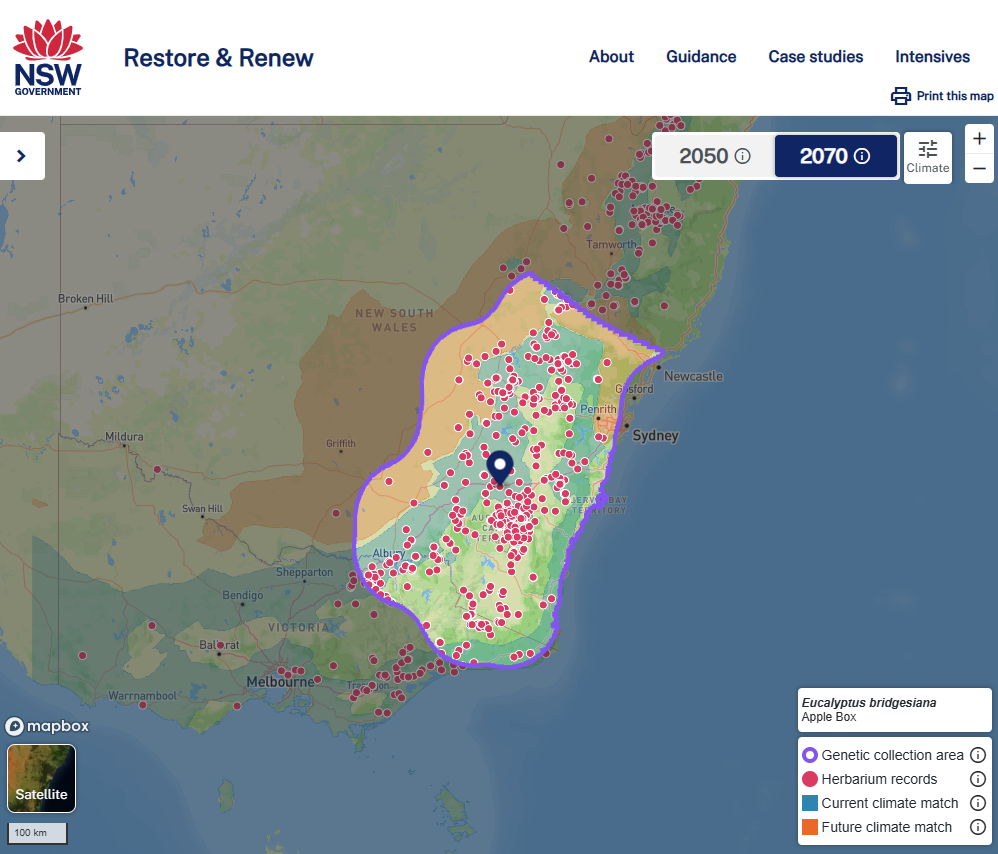
Luckily, with the Restore & Renew (R&R) webtool, we now have information at hand to make sure we are maximising genetic diversity as well as minimising the risk of 'outbreeding depression'—where bringing together genetics that are too different can actually reduce a plant’s fitness. There are currently 100 species on the R&R webtool. While we only grow about 40 species in our nursersies, around a quarter of those—including most of our Eucalypts—are covered by the tool.


 CRR seed sourcing 26 RR

 The Restore & Renew webtool identifies suitable seed collection areas for 100 native plant species


Besides considering a species’ natural distribution and the recommended genetic collection area, there are several other practical hurdles. Since we purchase the vast majority of our seed through retailers, we rely on information they can provide. We regularly ask questions such as:


  • Where was the seed collected? (We aim for around six different provenances per species).
  • Is the seed from remnant populations, Seed Production Areas (SPAs), or revegetation sites? (We can’t be sure of the original genetic provenance from reveg areas, and information about the original provenances that go into SPAs is variable).
  • Was the seed collected from a healthy stand of vegetation with numerous individuals? (Small, isolated populations have a greater chance of being in-bred).
  • What year was the seed collected? (Depending on the species, fresh seed generally has a better germination rate).
  • What is the price? (We have a limited budget).
  • What quanity is available? (Sometimes there is not enough for our requirements). 


In practice, decisions about which seed collections to purchase are a balancing act of these variables, requiring close scrutiny of numerous maps and spreadsheets!


Once the seed arrives in the mail, a volunteer conducts germination testing on each new collection, and only those that have viable seed are included in our spring sowing. This coming spring, some of the seed will go to direct seeding, as well as tubestock production. Watch out for more information on that in future blogs.


By Sonya Duus, Climate Ready Revegetation Project Officer


The Climate Ready Revegetation Project has been assisted by the NSW Government through its Environmental Trust. Landcare Australia Michael King grants enable us to purchase seed from diverse provenances.

Sharing Direct Seeding Knowledge to Grow Climate-ready Landscapes


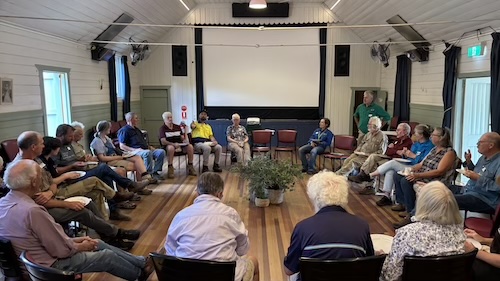
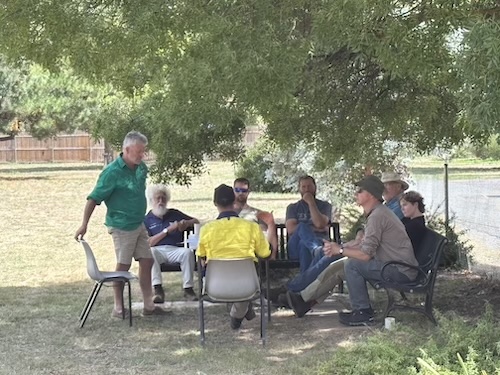
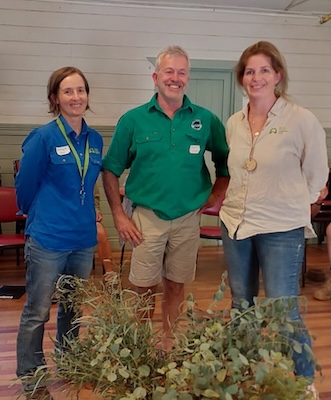
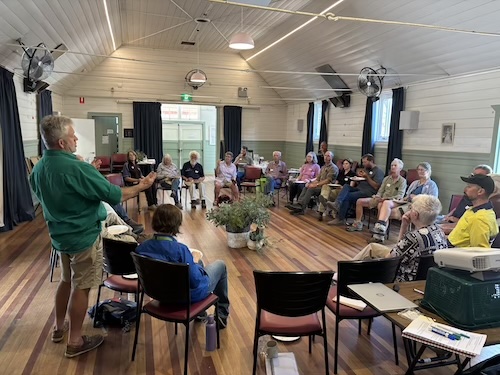
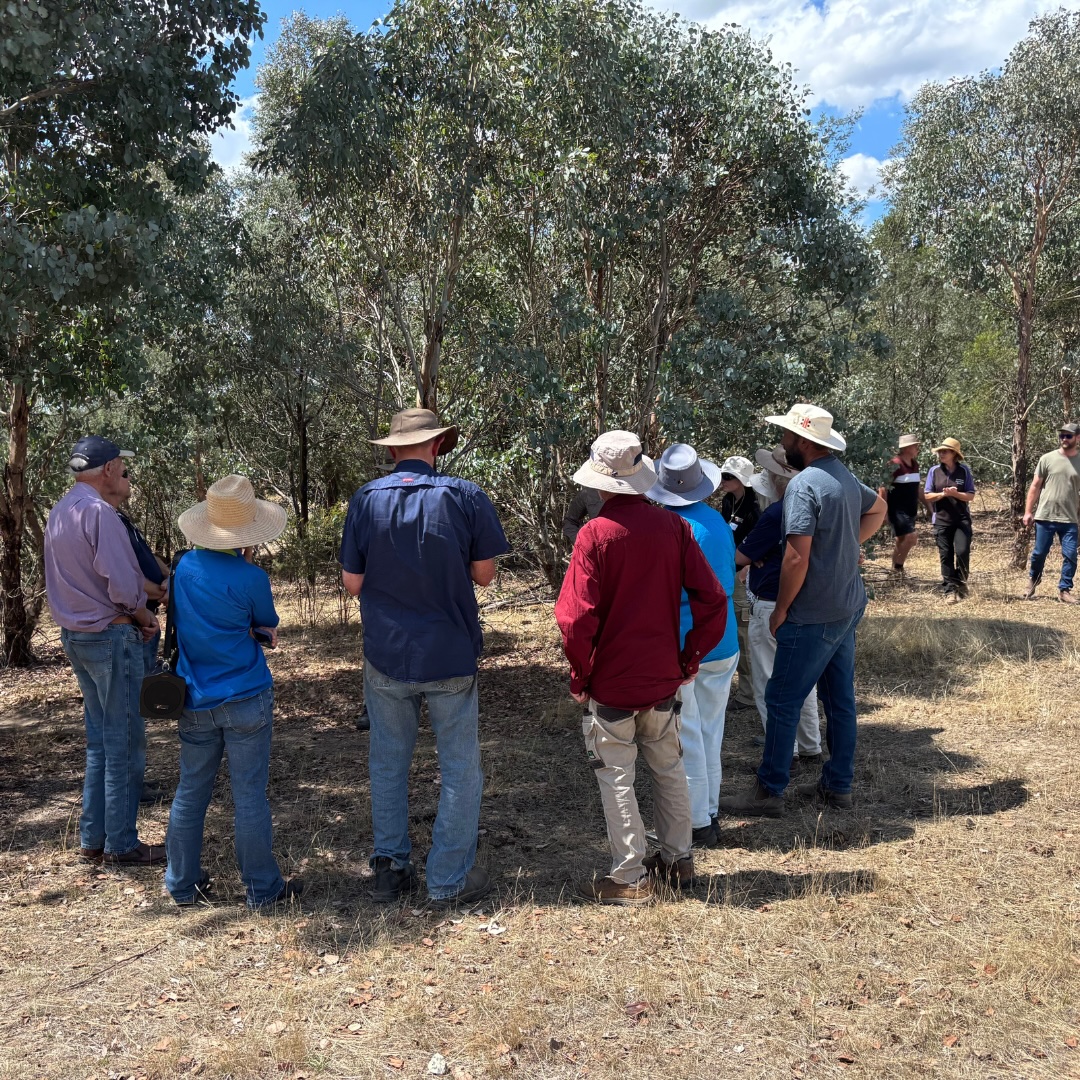
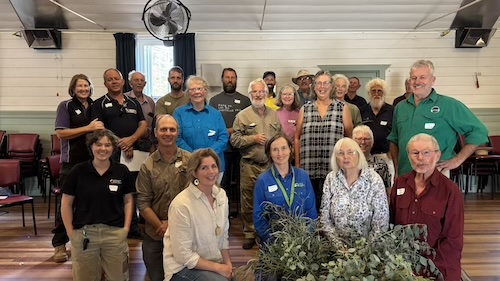
There is a wealth of experience across our region when it comes to revegetation through direct seeding. To tap into this collective wisdom, YAN recently invited practitioners, contractors, seed collectors, landholders and restoration specialists to come together for a Direct Seeding Knowledge Exchange workshop. 


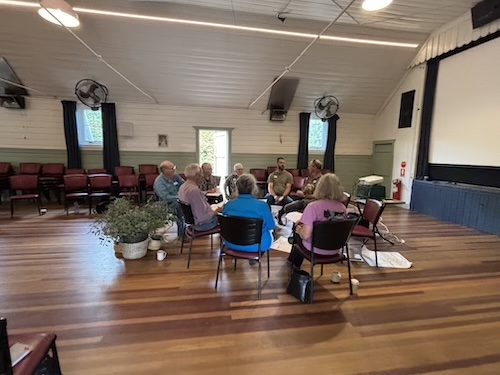
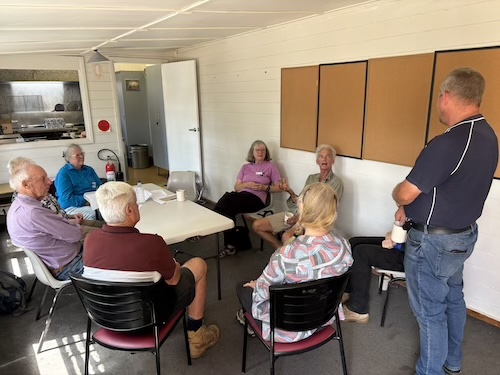
Gathered in Gundaroo Hall, the room was rich with stories; the good, the bad, and the little gems of insight that only come from years of practical experience. The aim was simple: learn from one another, distil practical knowledge, and strengthen our approach to building revegetation through direct seeding. 
 

DirectSeeding 260220 5582    DirectSeeding 260220 5577


What we explored 

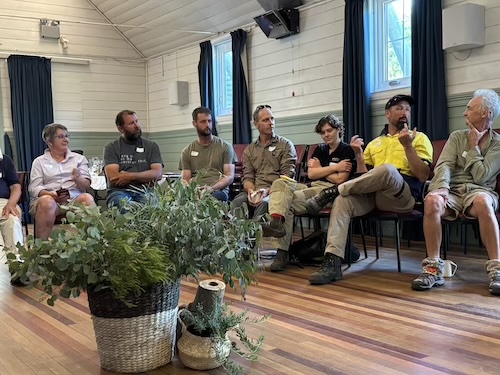
Across the morning, small and large group discussions covered the full spectrum of direct seeding practice: 

Seed sourcing and species selection 

We discussed what species are best suited to our landscapes, how many to include in a mix, and whether to collect or purchase seed. Participants shared practical advice on choosing species for different soils and landscape positions, and how to balance diversity with cost. 

Getting the job done 

Conversations covered the practical side of direct seeding — working with contractors, preparing sites, spraying, fencing, and planning. Clear planning and good communication were highlighted as essential. 

Looking after the site 

We explored how to manage and monitor sites over time, including thinning, tracking growth, and keeping monitoring meaningful and motivating. Compared with tube stock plantings, direct seeding was noted for its lower ongoing intervention. 
 

DirectSeeding 260220 5562   DirectSeeding 260220 5570


DirectSeeding 260220 5567   DirectSeeding 260220 5568


Key Insights from the Day 

Several powerful insights emerged: 

  • - Direct seeding can be done in any season. If the rain isn’t there, the seed still is. When conditions align, plants will emerge. 
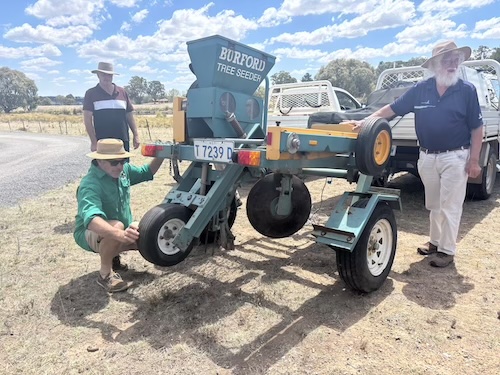
  • - The cost benefits are significant. From a farm economics perspective, direct seeding often costs less than tube stock planting and requires lower ongoing intervention. 
  • - Nature plays a role in selection. Direct seeding allows the landscape to “choose” what works best for that site. 
  • - The human benefits matter. There is something deeply rewarding about watching plants jump from the ground, hearing birds return, and feeling country grow healthier and more diverse. 
  • - Direct seeding and tubestock planting are complementary. Direct seeding can work in many, but not all situations. There is still a place for tubestock planting. 
  •  

Seeing the results at Ambrosia Park 

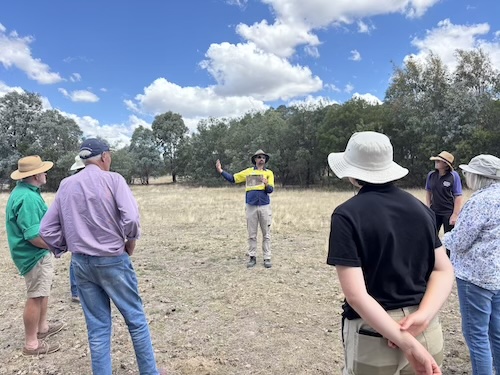
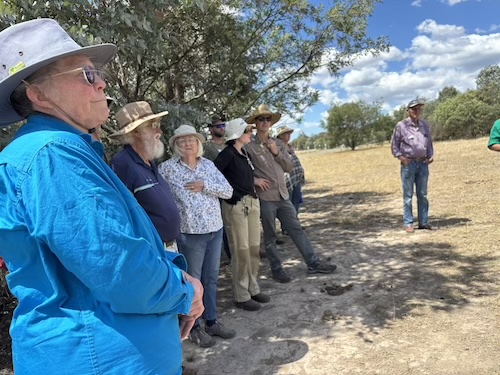
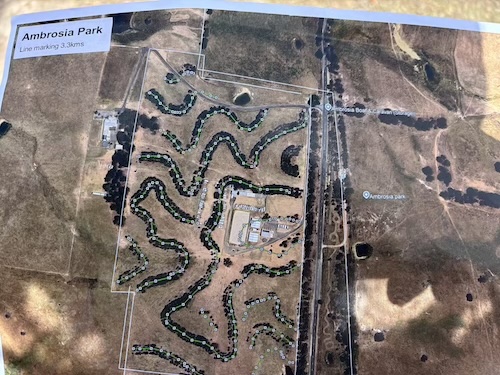
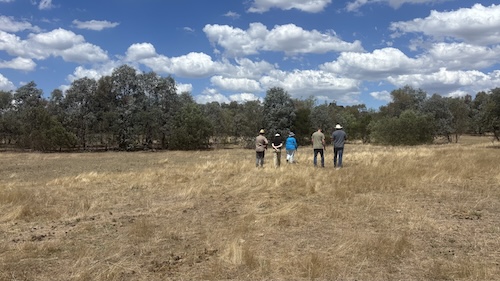
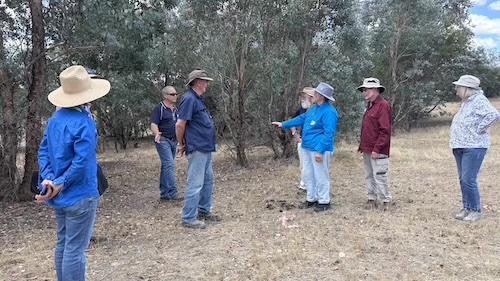
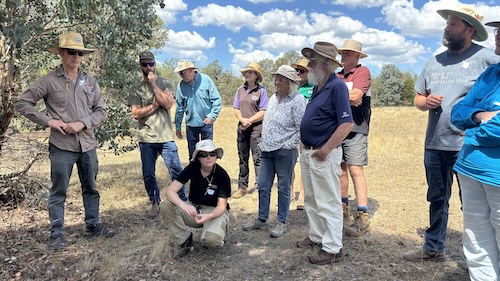
After lunch, participants travelled 10km outside Gundaroo to Ambrosia Park to see the long-term results of a 2012 Whole of Paddock Restoration (WOPR) project delivered by Greening Australia. 


The transformation was striking. Where once there was bare native grassland, now stands a thriving mosaic of trees and shrubs. Over 5,600 eucalypts and more than double that number of acacia species were established, creating shade, habitat and a functioning microclimate. 


Graham Fifield from Greening Australia spoke about the original site design, species mix, layout and the ongoing monitoring approach. Current custodians Jess and Rob Garnett shared their joy in watching the site evolve, seeing livestock benefit from shelter, hearing birds return, and witnessing the country grow in resilience. 


Standing beneath the canopy, listening to birdsong and feeling the temperature shift under shade, it was a powerful reminder of how dramatic change can occur within a relatively short period of time. 
 

DirectSeeding 260220 5588   DirectSeeding 260220 5592


DirectSeeding 260220 5599   DirectSeeding 260220 5596


DirectSeeding 260220 5613   DirectSeeding 260220 5602


What’s next? 

There is much more to share from this rich day of exchange. We will be distilling the knowledge gathered and incorporating it into our Climate Ready Revegetation and Habitat Hops programs. 


If you’re curious about direct seeding, whether you’re just starting out or looking to refine your approach, please get in touch. Within the YAN network there is an abundance of experience, practical advice and people willing to help you grow climate-ready landscapes. 
 

DirectSeeding 260220 5609   DirectSeeding a


DirectSeeding 260220 5572


Written by Sarah McGrath, Bowning Bookham Coordinator & Sonya Duus, Climate Ready Revegetation Project Officer


 

DirectSeeding Acknowledgemnt

Our Climate Ready Revegetation Story in Motion

As Landcarers, we’re often focused on getting things done at the ground level. Informed by the bigger picture, absolutely, but then turning that information into practical action in our local area.


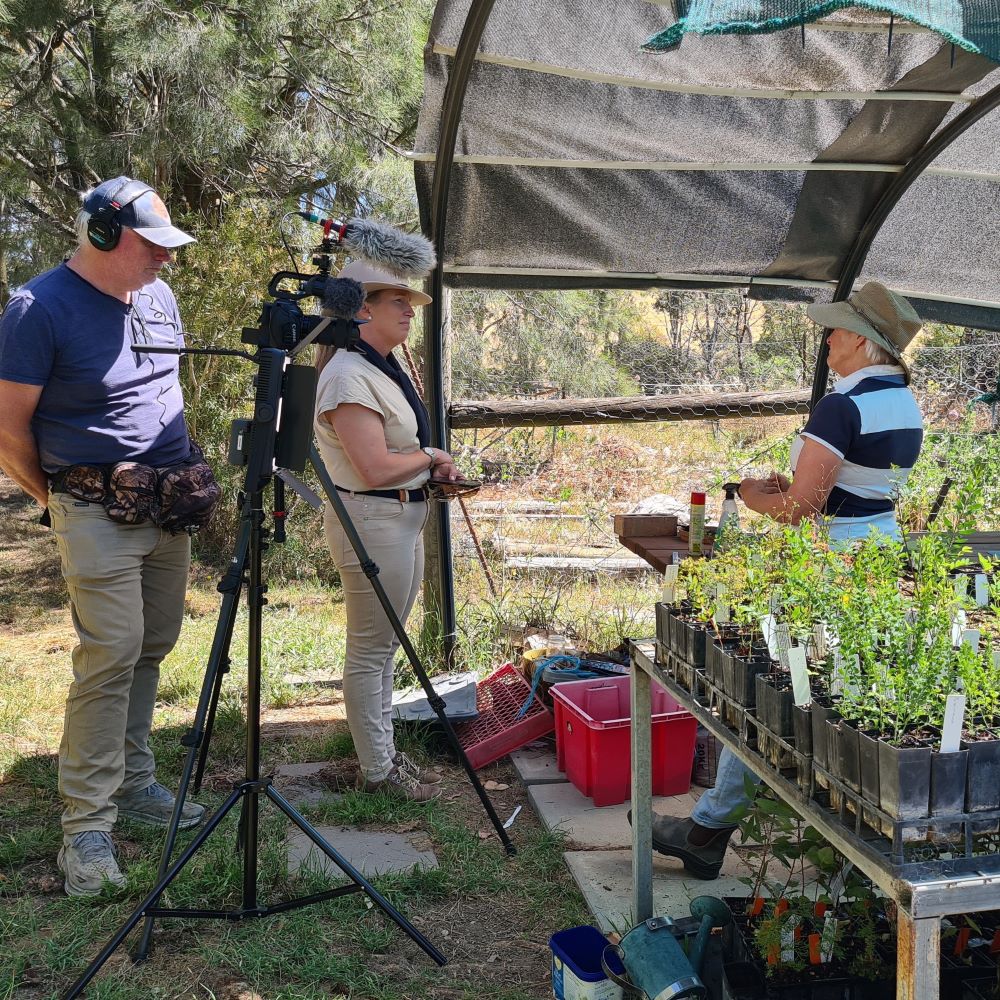
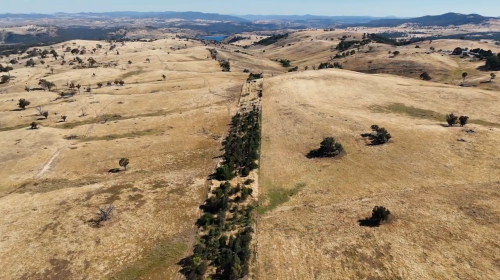
Taking a step back to tell our story on camera was a rare opportunity to take more of a birds-eye view of our work; a parallel to the drone footage of a long expanse of revegetation making connections through a highly cleared landscape. It gave us a chance to reflect on what we have achieved through working with our amazing volunteers and connecting up with other groups and organisations, powered by a strong and common concern to do something positive in the face of climate change.


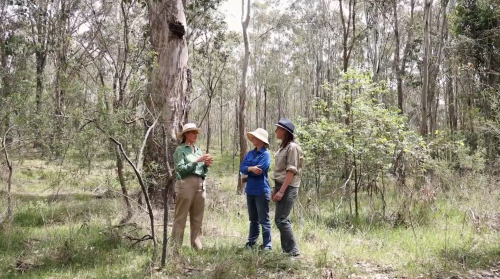
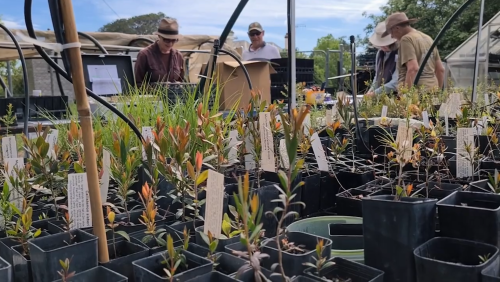
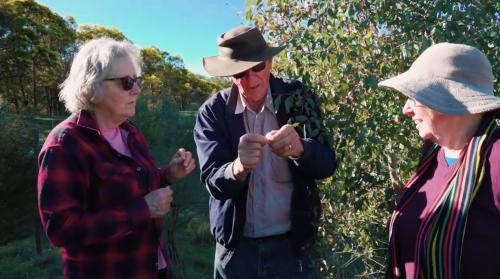
 CRR Video Wattle Valley smaller CRR Video Bot Gdns smaller


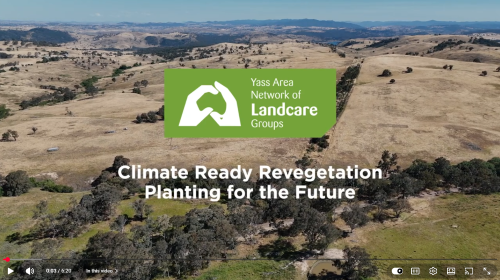
We engaged Suzannah Cowley and her team from Nviro Media to create a short video, funded by our NSW Environmental Trust Grant and YAN. We provided an outline of what we thought should be covered—the people, motivation, ideas, and publicly available resources that make our program possible—with the aim of inspiring others to start their own climate-ready journeys. Suzannah then applied her professional craft to produce an engaging video that delivers a powerful message.


CRR Video MLG nursery smaller CRR Video Xanadu 2 smaller 


We are really happy with the outcome, and we hope you like it too! We’d love to hear what this inspires in your own patch.


CRR Video Opening title smaller


For more information about YAN's Climate Ready Revegetation Program, check out our webpage: https://yan.org.au/projects/climate-ready-revegetation


By Sonya Duus, Climate Ready Revegetation Project Officer
 

The Climate Ready Revegetation Project has been assisted by the NSW Government through its Environmental Trust. Landcare Australia Michael King grants enable us to purchase seed from diverse provenances.

Follow on Facebook